The 2026 Global Logistics Reality Check: Stop Budgeting Like It’s 2023
If you are building your 2026 supply chain strategy based on the assumption that global shipping will eventually “return to normal,” we need to have a serious conversation.
The “normal” you are waiting for no longer exists.
At Kisun Shipping, we spend our days analyzing carrier data, navigating customs overhauls, and untangling supply chains for importers across the globe. What we are seeing on the ground right now isn’t a temporary disruption; it is a fundamental rewiring of global trade. Between aggressive new trade policies, stringent environmental taxes, and a map full of permanent geopolitical chokepoints, the cost of moving a box from Point A to Point B has fundamentally changed.
If you want to protect your margins this year, you need to stop reacting to the news and start adapting to the new baseline. Here are the four massive shifts dominating the 2026 global logistics landscape, and exactly what smart importers are doing to survive them.
Trend 1: The Regulatory Sledgehammer (The End of the “Loophole” Era)
For the past decade, e-commerce giants and dropshippers relied on a massive loophole: the $800 De Minimis threshold in the US (and similar thresholds in the EU), which allowed millions of small parcels to bypass customs duties and formal entry.
That era is over.
With the suspension of De Minimis privileges for major manufacturing hubs like China, customs authorities aren’t just looking for tax revenue; they are weaponizing compliance.
- The Impact: We are seeing small parcel shipping costs double. Packages that used to sail through customs are now subject to formal entry fees, Merchandise Processing Fees (MPF), and tariffs based on specific HS codes.
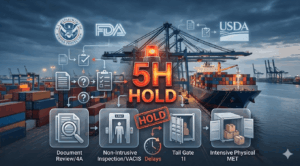
- The Squeeze: If you are still relying on direct-to-consumer air freight from Shenzhen to Los Angeles, your landed costs are likely destroying your profit margins. Furthermore, aggressive customs algorithms are triggering holds (like the dreaded ) at unprecedented rates.
The 2026 Survival Tactic: The market is violently shifting back to bulk and localization. Smart importers are abandoning the air-express model. Instead, they are consolidating cargo into Full Container Loads (FCL) via ocean freight, storing inventory in US or EU-based 3PL warehouses, and fulfilling orders domestically. By doing this, they pay duties once at the port of entry at a much lower cost-per-unit, entirely bypassing the small-parcel bloodbath.
(Curious if FCL is right for your volume? Check our FCL vs LCL).
Trend 2: The “Green Premium” is Now a Hard Cost
Sustainability is no longer a corporate buzzword; it is a line item on your freight invoice. In 2026, environmental regulations have evolved from “guidelines” to strict financial penalties.
The European Union’s Emissions Trading System (EU ETS) is now heavily impacting the maritime industry. Carriers must purchase carbon allowances for emissions generated on voyages to, from, and between EU ports.
- The Trickle-Down Effect: Ocean carriers are not absorbing these millions of dollars in carbon taxes. They are passing them directly to you via Emissions Surcharges.
- Slow Steaming: To comply with the IMO’s Carbon Intensity Indicator (CII), vessels are literally driving slower to burn less fuel and improve their emissions grades.
The 2026 Survival Tactic: Transit times are getting longer, and base rates are getting higher. You can no longer rely on “Just-In-Time” inventory. You must transition to a “Just-In-Case” model. Add a minimum of 7 to 14 days of buffer time to your sea freight schedules. When negotiating rates, ask your forwarder to clearly break down the base rate versus environmental surcharges so you aren’t blindsided.
Trend 3: The “New Normal” of Fractured Geography
Remember when the Suez Canal and the Panama Canal were the undisputed arteries of global trade? In 2026, relying on these chokepoints is a gamble.
The diversions around the Cape of Good Hope (avoiding the Red Sea) are no longer treated as an emergency detour by major shipping alliances—they are baked into the standard schedules.
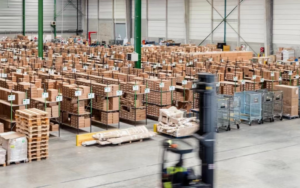
- Equipment Imbalances: Because ships take 10 to 14 days longer to complete a loop around Africa, millions of empty containers are tied up on the water instead of returning to Asian ports. This creates acute equipment shortages in hubs like .
- Blank Sailings as a Weapon: Carriers have mastered the art of capacity management. If demand drops slightly, they will ruthlessly execute “blank sailings” (canceling scheduled voyages) to artificially tighten space and keep spot rates high.
The 2026 Survival Tactic: Loyalty pays off. Shippers who constantly hop between forwarders chasing a $50 discount are the first ones to get their cargo “rolled” (left on the dock) when space is tight. Partner with a forwarder like Kisun Shipping who has block space agreements and strong carrier relationships to ensure your cargo gets loaded, even during a capacity crunch.
(Learn how the Strait of Hormuz Closure influences global shipping, check out Strait of Hormuz Closure 2026 Global Freight Rates Surge).
Trend 4: “China Plus One” Actually Means “China Plus Logistics”
The geopolitical push for “nearshoring” and “friendshoring” has led many brands to open factories in Mexico, Vietnam, or India. However, the reality of 2026 is that the global supply chain has not left China; it has merely stretched.
Most Southeast Asian and Latin American factories still heavily rely on raw materials, components, and machinery imported from China.
- The Complication: Shipping raw materials from Guangzhou to Monterrey (Mexico), assembling the product, and then crossing the US border has created incredibly complex, multi-leg logistics chains.
- The Compliance Trap: US Customs is aggressively auditing the “Country of Origin” rules. If you claim a product is “Made in Mexico” but 80% of its value came from China, you might face severe anti-circumvention penalties and retroactive tariffs.
The 2026 Survival Tactic: Visibility is your greatest asset. You need a logistics partner who doesn’t just book a ship, but who understands cross-border compliance, tariff engineering, and multi-modal transport. Whether you are shipping direct from Shenzhen or routing components through Southeast Asia, your paperwork must be bulletproof.
The Bottom Line for Importers
2026 is the year that separates the amateurs from the professionals. The days of plugging a weight into a shipping calculator, picking the cheapest rate, and forgetting about it are over. Logistics is now a core strategic function of your business.
At Kisun Shipping, we aren’t just moving boxes; we are engineering supply chain resilience. We help our clients navigate carbon taxes, optimize their port selections, and restructure their shipping methods to bypass costly customs traps.
Stop losing margin to logistics blind spots.
Frequently Asked Questions (FAQ) – 2026 Global Shipping
Q: How is the end of the De Minimis exemption affecting my shipping costs?

A: With the suspension of the $800 duty-free threshold, small parcels from regions like China are now subject to formal customs entry, merchandise processing fees, and standard tariffs. For many e-commerce sellers, this has doubled the cost of shipping direct-to-consumer. We advise transitioning to bulk ocean freight (FCL/LCL) and utilizing domestic warehousing.
Q: Why are ocean transit times longer in 2026 than they were a few years ago?
A: Two main reasons: First, geopolitical tensions in the Red Sea have made routing around the Cape of Good Hope a standard, adding up to two weeks to Asia-Europe/US East Coast routes. Second, strict environmental regulations (like the IMO's CII) force ships to practice "slow steaming" to burn less fuel and reduce carbon emissions.Q: What is the EU ETS surcharge on my freight invoice?
A: The EU Emissions Trading System (ETS) requires maritime carriers to purchase carbon credits for emissions. Carriers pass this cost to shippers via an ETS surcharge. This applies to shipments arriving at, departing from, or transshipping through European ports.Q: How can I protect my cargo from being "rolled" during equipment shortages?
A: Equipment shortages happen when containers are tied up on longer transit routes. To protect your cargo, provide your freight forwarder with accurate, long-term volume forecasts (at least 3-4 weeks in advance) rather than booking at the last minute. Working with a dedicated forwarder who has strong carrier allocations, like Kisun Shipping, significantly reduces your risk.
China Logistics Expert
About the Author
Katherine Kang is a China-based logistics consultant with over 11 years of experience in international trade and freight forwarding. Specializing in helping SMEs import from China to the USA, Canada, and Europe, she focuses on compliant, cost-effective solutions to avoid delays, tariffs, and hidden fees. From anti-dumping guidance to CNY planning, Katherine has managed hundreds of shipments, saving clients 15-30% on average.
Connect with Katherine on LinkedIn or contact Kisun Shipping for a free import consultation.