2026 Middle East Shipping Crisis: Strait of Hormuz Escalation, Port Closures, and the Global Logistics Ripple Effect
The global supply chain is currently facing its most severe “Red Alert” since the 2021 Suez Canal blockage. Between February 28 and March 1, 2026, the conflict involving the US, Israel, and Iran has shifted from a regional skirmish to a full-scale maritime and aviation paralysis.
At Kisun Shipping, we are monitoring the situation 24/7. This report provides a detailed breakdown of the current infrastructure status and a strategic survival guide for importers.
The Escalating Crisis: Key Events in March 2026
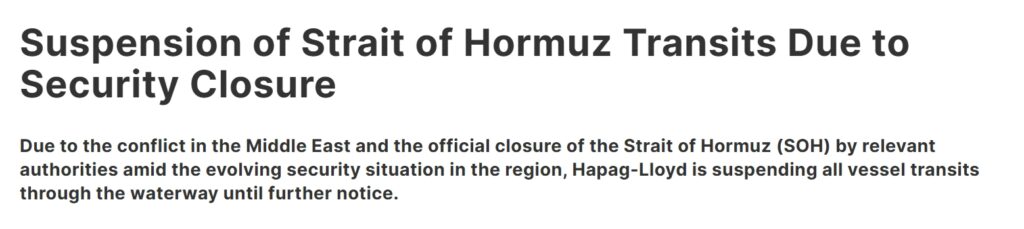
From February 28 to March 1, at least three oil tankers were attacked in the Strait of Hormuz, resulting in crew casualties and heightened alerts (UKMTO Advisory 001/MAR/2026). Iranian authorities broadcasted a “closure” of the strait via VHF channel 16, though UKMTO clarified this as unauthorized — still, it has deterred vessels.
Major ports like Jebel Ali (Dubai) suspended operations on March 1 per DP World statement, citing government directives amid debris strikes from interceptors (Lloyd’s List Intelligence, March 2026). While the notice was withdrawn, effective shutdowns persist, with inspection rates up 30% (Maersk Middle East Update, March 2026).
Other impacts:
- Bahrain: All ports closed, including pilotage (Bahrain Ports Authority, March 2026).
- Qatar: Ras Laffan and Mesaieed open but with reduced traffic and GPS interference (Qatar Petroleum Alert, March 2026).
- Oman: Duqm port halted after drone attacks injuring workers (Oman News Agency, February 2026).
- UAE: Partial airspace closure; Dubai/Abu Dhabi airports suspended (Emirates Advisory, March 2026).
Airspace closures in Iran, Israel, Qatar, Iraq, Kuwait, Bahrain, and partial in UAE/Syria/Jordan have canceled thousands of flights .

Middle East Port Status Dashboard (Updated March 1, 2026)
The suspension of Jebel Ali, the largest hub in the Middle East, has sent shockwaves through the industry. Here is the current operational status across the region:
| Port | Country | Current Status | Notes |
| Jebel Ali | UAE | Effectively Suspended | Operations halted following Govt instructions; fire reported at berths. |
| Bahrain Ports | Bahrain | Closed | All national ports and pilotage services suspended. |
| Duqm / Asyad | Oman | Suspended | Attacked by drones; foreign workers injured; facilities damaged. |
| Ruwais | UAE | Open (High Risk) | Upgraded to ISPS Security Level 2 (Clear Threat). |
| Mesaieed / Ras Laffan | Qatar | Limited Ops | GPS interference reported; vessel traffic down by 60%. |
| Sharjah / Khor Fakkan | UAE | Open | Currently serving as secondary alternatives, but nearing congestion. |
How the Middle East Conflict Impacts Global Shipping from China
The crisis disrupts 12% of global trade through the Strait of Hormuz (UNCTAD Maritime Review 2025), affecting oil, LNG, and container flows.
Sea Freight Impacts from China:
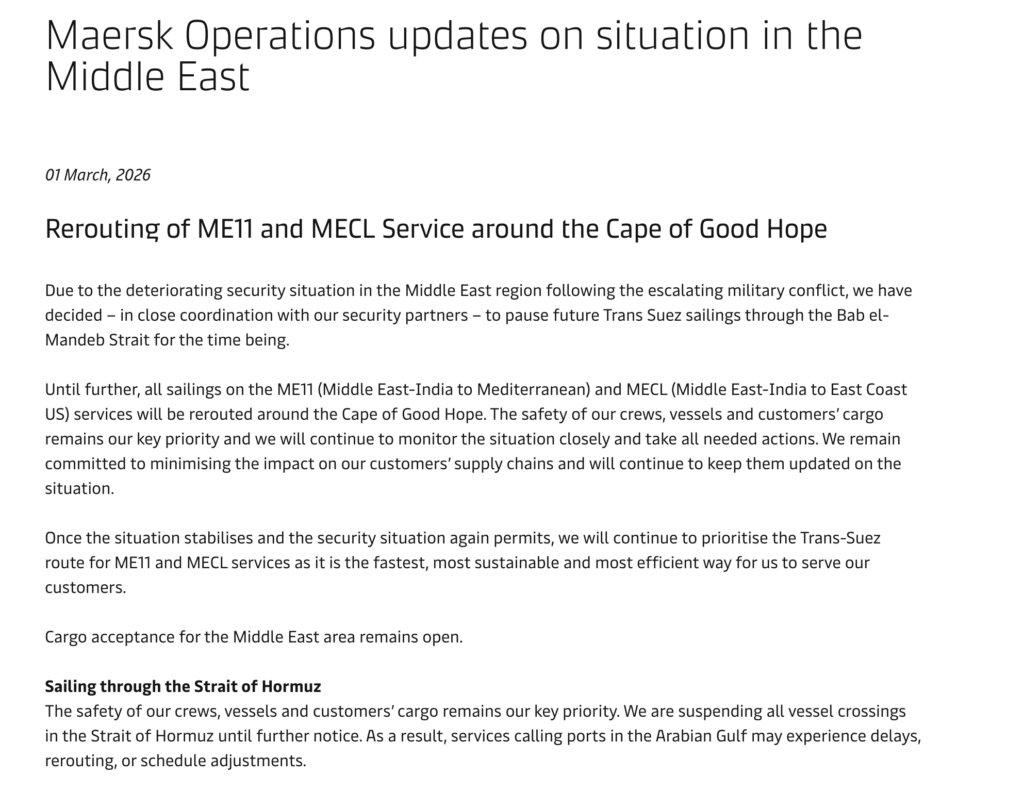
- Route Disruptions: Red Sea/Suez alternatives (Cape of Good Hope) add 10-14 days to Europe/USA East Coast routes, increasing fuel costs by 40%.
- Freight Rate Surge: China to Europe rates up 50-70% ($4,500-6,000/40HQ); China to USA West Coast might be stable but East Coast +20% due to Panama backups.
- Port Congestion: Jebel Ali closure shifts traffic to Salalah (Oman) and Jeddah, causing 7-10 day delays (Port of Salalah Update, March 2026).
- Insurance Premiums: War risk surcharges +15-25% for Middle East routes.
Air Freight Impacts from China:
- Capacity Crunch: Middle East hub closures (Dubai/Doha) reduce belly cargo by 30%, forcing reroutes via Istanbul or Frankfurt .
- Rate Volatility: China to Europe/USA air rates +20-40% ($5-8/kg), with GPS interference delaying flights.
- Belly Cargo Loss: Passenger flight cancellations cut 50% capacity on key routes.
Rail Freight Impacts from China:
- Indirect Effects: CR Express to Europe is unaffected directly but sees +10% demand as sea alternative, causing capacity shortages (China Railway Corporation Report, March 2026).
- Middle East Routes: Limited Iran/Turkey lines halted, shifting to Caspian Sea bypasses +3-5 days (Belt and Road News, March 2026).
Global spillover: Oil prices +15% (EIA Short-Term Energy Outlook, March 2026) pushes all freight costs up 5-10%.
Global Market Impact: What Importers Must Know
The “spillover” from the Middle East will affect your bottom line, even if you aren’t shipping to Dubai.
- Maritime-Air Shift: As sea freight detours around the Cape of Good Hope (adding 14-20 days), urgent cargo is shifting to air. However, with reduced airspace, air freight is now both more expensive and slower.
- Panic Buying & Surcharges: We anticipate immediate spikes in freight rates for consumer electronics and pharmaceuticals. “War Risk Surcharges” are likely to be implemented by all major carriers by next week.
- Customs & GPS Delays: Even in “Open” ports like Qatar, GPS interference is causing berthing delays, leading to longer customs processing times.
Kisun Shipping’s Strategic Advice for Importers
To navigate this crisis, we recommend a three-tier approach:
A. For Middle East Importers (UAE, Saudi, Qatar)
- Safety First: Prioritize the safety of your local teams.
- Port Diversion: If your cargo is bound for Jebel Ali, talk to your Kisun representative about diverting to Khor Fakkan or overland transport from safer entry points.
- Internal Link: Review our Guide to Shipping from China to Saudi Arabia for alternative land-bridge routes.
- Insurance & Contracts: Add war risk clauses, see our Cargo Insurance Guide.
B. For Global Importers (USA, Europe, SE Asia)
- Lead Time Buffer: Add a mandatory 21-day buffer to all current sea freight estimates.
- Rate Lock-In: If you have urgent cargo, book Air Freight immediately before the full impact of belly-capacity loss hits the market. Check our Air Freight Services for real-time availability.
- Inventory Adjustment: Move from “Just-in-Time” to “Just-in-Case” inventory models to avoid stockouts caused by Strait of Hormuz closures.
Frequently Asked Questions (FAQ) on Middle East Shipping Crisis 2026
Q: How does the US-Israel-Iran conflict affect shipping from China?

A: Reroutes add 10-14 days, rates up 20-50%.
Q: What ports are closed in Middle East 2026?
A: Jebel Ali (partial), Duqm, Bahrain all ports.Q: Air freight impact from Middle East crisis?
A: Capacity down 30%, rates +20-40%.Q: Best alternatives to Red Sea route?
A: Cape of Good Hope for sea, CR Express for Europe rail.Q: How to reduce risks in 2026 shipping crisis?
A: Diversify, insure, monitor — contact us for newest updates.Final Thought: Stability Amidst Turbulence
At Kisun Shipping, we remain committed to finding the “path of least resistance” for your cargo. While we hope for a swift return to peace, we are prepared to handle the most complex logistics challenges 2026 has to offer.
Need an urgent rerouting plan? Contact Kisun Shipping’s Crisis Management Team for a customized solution.
Hoping for world peace.

China Logistics Expert
About the Author
Katherine Kang is a China-based logistics consultant with over 11 years of experience in international trade and freight forwarding. Specializing in helping SMEs import from China to the USA, Canada, and Europe, she focuses on compliant, cost-effective solutions to avoid delays, tariffs, and hidden fees. From anti-dumping guidance to CNY planning, Katherine has managed hundreds of shipments, saving clients 15-30% on average.
Connect with Katherine on LinkedIn or contact Kisun Shipping for a free import consultation.