
Introduction: The “Ghost Month” of Global Logistics
As we wrap up 2025 and look toward the horizon of 2026, every experienced importer knows the looming giant on the calendar: Chinese New Year (CNY).
If you are new to importing, or if you have previously treated CNY as just a “one-week holiday,” this guide is your wake-up call. In the world of logistics, February 2026 is not just a month; it is a logistical black hole.
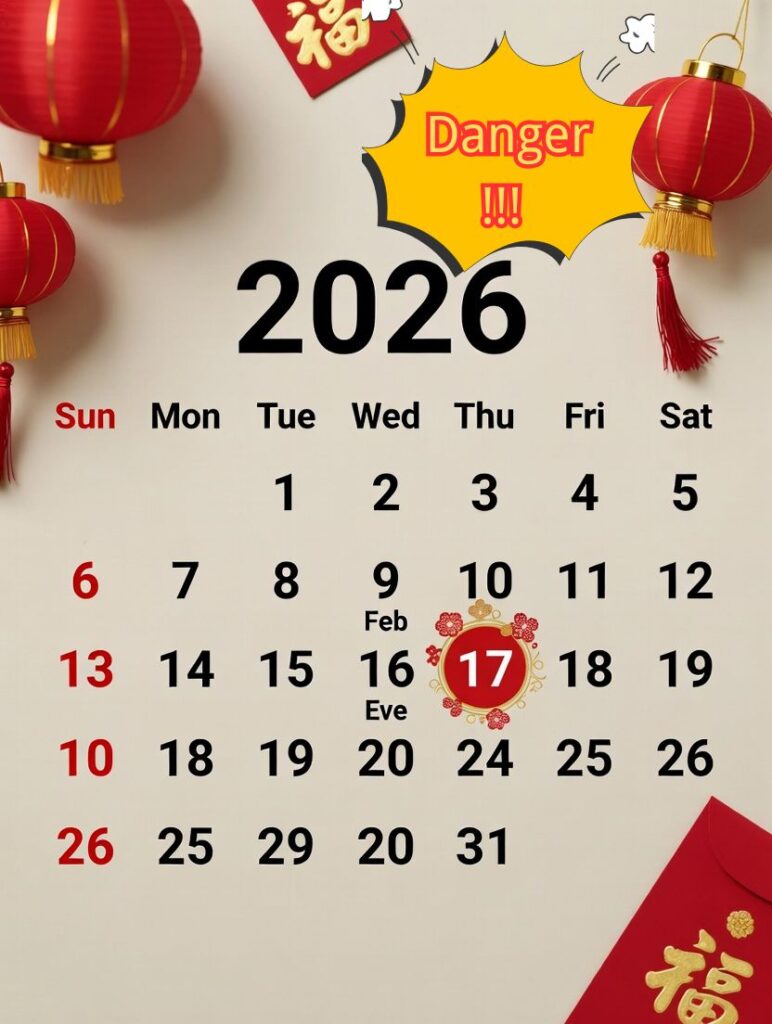
The official Spring Festival for 2026 is set for February 15th , with the public holiday running roughly from February 15th to February 23rd. However, the calendar on your wall does not reflect the reality on the ground in China. In the logistics world, the disruption starts in late January and creates ripples that last until March.
At Kisun Shipping, my philosophy as your Private Logistics Manager is simple: Certainty over Chaos. I hate seeing clients pay 200% more for shipping, only to have their cargo stuck at a port for three weeks.
Here is the unfiltered truth about why you should move heaven and earth to avoid shipping from China in February 2026—and exactly how to plan your supply chain instead.
1. The Reality of the Calendar: It’s Not Just a Week
You might look at the official dates and think, “Okay, the holiday starts on the 15th. I can ship on the 12th, right?”
The short answer: Theoretically, yes. The honest answer: Don’t do it.
The “Migration” Factor
What many importers don’t realize is that the Chinese workforce powers the world’s largest annual human migration. Millions of factory workers, truck drivers, and port operators travel from coastal industrial cities back to their inland hometowns.
- Late January 2026: Workers begin requesting leave. Production slows down.
- February 1–10, 2026: The “Skeleton Crew” phase. Factories operate at reduced capacity. Truck drivers start leaving.
- February 11, 2026: Most small to mid-sized factories effectively shut down.
- Early March 2026: Full production capacity doesn’t return until workers travel back, usually 2-3 weeks after the holiday.
The Pro Insight: If your goods aren’t at the port by February 5th, you are entering the “Danger Zone.”
2. The Cost Explosion: Paying More for Less
In February, the laws of supply and demand go haywire.
Ocean Freight: The GRI Spikes
Every single year, shipping lines implement a General Rate Increase (GRI) right before CNY. Why? Because they know everyone is desperate to get their goods on the water.
- The Premium: You could end up paying 2x to 3x the normal ocean freight rate for a spot in early February.
- The Result: You destroy your profit margins for Q1 just to get the goods moving, but as we will discuss later, paying more doesn’t guarantee your cargo leaves on time.
Inland Trucking: The “Driver Auction”
This is the hidden cost that shocks most SMEs. By early February, finding a truck driver in Shenzhen, Ningbo, or Shanghai is like finding water in a desert.
- Scarcity: Drivers leave earlier than factory workers to beat the traffic.
- The Price Tag: We have seen inland trucking fees double or triple.
- The Bribe: In past years, we’ve had to throw in an extra $200–$400 USD “red packet” (bonus) just to secure a spot for a client who insisted on shipping late.
- The Risk: Even if you pay, if you miss the pickup window by one hour, the driver might just leave. Their schedule is packed, and they want to go home.
3. The “Rolled Cargo” Nightmare
This is the most heartbreaking part of the February rush, and it happens every year without fail.
Let’s say you paid the inflated shipping rate. You paid the premium trucking fee. Your container is at the port. You think you are safe. Think again.
Because everyone is rushing, shipping lines overbook vessels by 120% to 150%. When the ship arrives, there isn’t enough space for all the containers.
- What happens? The carrier “rolls” your cargo to the next sailing.
- The problem: The “next sailing” might be cancelled (see below).
- The consequence: We have seen clients who booked and paid for a pre-CNY sailing, only to find out their container sat on the dock for three weeks and didn’t leave until March. They paid premium February prices for March service.
4. The “Blank Sailing” Strategy
You might expect that after the holiday, when demand drops, shipping lines would lower prices to attract business. They don’t.
Instead, shipping lines use a strategy called “Blank Sailings” (canceling voyages).
- Why? To artificially reduce supply and keep freight rates high.
- The Impact: After CNY, there are very few ships available. If your cargo was rolled from February, it is now fighting for limited space in March. This creates a backlog that can take a month to clear.
5. Inside the Factory: The “All Hands on Deck” Rush
I want to share a personal story from my time in the industry to help you understand the atmosphere inside a Chinese factory before CNY.
About eight years ago, I was working as a salesperson for a manufacturer. It was one week before the holiday. The factory was overwhelmed with orders. To ensure every single client’s order was shipped on time, the entire company—sales team, managers, admin staff—pulled an “all-nighter.” We went down to the production line to help pack boxes, label cartons, and tape shipments.
Funny enough, just last year, a friend of mine who is still a sales manager told me the exact same thing happened to his team. Some things never change.
A Note on Quality Control (QC)
Now, as an importer, hearing that “salespeople are packing boxes” might make you nervous about quality. Let me reassure you.
In professional factories:
- Strict QC Protocols: The Quality Control department never rushes. They operate independently. While sales teams help with manual labor like folding cartons or applying shipping labels to speed up volume, every product must still pass the QC inspection station before it goes into the box.
- No Compromise: We helped to clear the bottleneck of packaging, not to bypass the standard of production.
However, the general chaos of the pre-CNY rush does increase the risk of minor errors (wrong shipping marks, missing paperwork). This is why having a Private Logistics Manager to double-check documents is crucial.
6. The 2026 Strategic Timeline: When Should You Ship?
If February is the “No-Go Zone,” how should you plan? Here is the timeline I recommend to all my clients for 2026.
Option A: The “Early Bird” (Recommended)
- Goal: Ship before the rush.
- Production Deadline: Finish production by January 20, 2026.
- Booking Date: Book your container by January 15, 2026.
- Result: You get standard freight rates, standard trucking costs, and your goods arrive before your competitors who got stuck in the February backlog.
Option B: The “Patient Strategist”
- Goal: Wait for stability.
- Strategy: If you can’t finish production by Jan 20th, do not rush. Let the goods sit safely in the warehouse (or our consolidation warehouse).
- Ship Date: Book for mid-March 2026.
- Result: Rates will normalize, trucking availability returns to 100%, and the risk of rolled cargo drops to near zero.
Conclusion: Don’t Gamble with Your Supply Chain
Importing from China is profitable, but only if you control your logistics costs. The February CNY period is the “Casino Season” of shipping—high stakes, high costs, and unpredictable outcomes.
My advice for 2026: Wrap up your shipments in January. If you miss that window, take a deep breath, wait until March, and save yourself the stress and the money.
Are you planning your 2026 inventory? Don’t navigate the Chinese New Year chaos alone. Contact Kisun Shipping today. Let’s build a shipping schedule that protects your profit margins and ensures your goods arrive when you need them.
FAQ: Chinese New Year 2026 Shipping
Q: When is the Chinese New Year 2026?
A: Chinese New Year Day is February 15, 2026. However, disruptions begin in late January.
Q: Will factories be open in February 2026?
A: Most factories will be closed or operating with skeleton crews from approx. Feb 10th to March 1st.
Q: Why are freight rates higher in February?
A: A combination of the pre-holiday rush (high demand) and General Rate Increases (GRI) imposed by carriers.
Q: What is a “Blank Sailing”?
A: It is when a shipping line cancels a scheduled voyage. This is common after CNY to keep freight rates high despite lower demand.
Q: Can I ship during the CNY holiday?
A: Ports remain operational, but customs clearance, trucking, and warehousing are severely limited and expensive. It is highly recommended to avoid this period.
Contact us today for a complimentary consultation and a transparent quotation. Let’s make your next import smoother and more profitable.

China Logistics Expert
About the Author
Katherine Kang is a China-based logistics consultant with over 11 years of experience in international trade and freight forwarding. Specializing in helping SMEs import from China to the USA, Canada, and Europe, she focuses on compliant, cost-effective solutions to avoid delays, tariffs, and hidden fees. From anti-dumping guidance to CNY planning, Katherine has managed hundreds of shipments, saving clients 15-30% on average.
Connect with Katherine on LinkedIn or contact Kisun Shipping for a free import consultation.