
The Global Freight Shock of 2026: How the Strait of Hormuz Closure is Driving Up Shipping Costs Worldwide
The global supply chain has officially entered a new era of volatility. Driven by the escalating conflict between the US, Israel, and Iran, the closure of the Strait of Hormuz in late February 2026 has sent shockwaves far beyond the Middle East.
At Kisun Shipping, our data and intelligence teams are tracking an unprecedented phenomenon: the ripple effect of a regional blockade causing immediate, massive price hikes across entirely unrelated global trade lanes. The first wave of price increases has hit, affecting multiple markets in Europe, the Mediterranean, South America, and Asia.
Major shipping companies have collectively begun to take aggressive action. In a matter of days, carriers rapidly withdrew their previous pricing structures, replacing them with severe General Rate Increases (GRI) and Peak Season Surcharges (PSS).
In this comprehensive guide, Kisun Shipping breaks down the exact rate increases by the world’s leading carriers, analyzes the latest market indices, and, most importantly, answers the critical question: Why does a blockade in the Middle East cause your shipping rates to South America or Europe to skyrocket?
(Stay updated with our ongoing crisis coverage: Read our previous report on the 170+ Container Ships Stranded in the Persian Gulf.)
The First Wave of Price Increases – Carrier by Carrier Breakdown
Riding the wave of the geopolitical crisis, ocean carriers have moved swiftly to protect their margins and manage the sudden capacity crunch. The speed at which these increases were implemented is historic.
1. MSC (Mediterranean Shipping Company): The First Mover
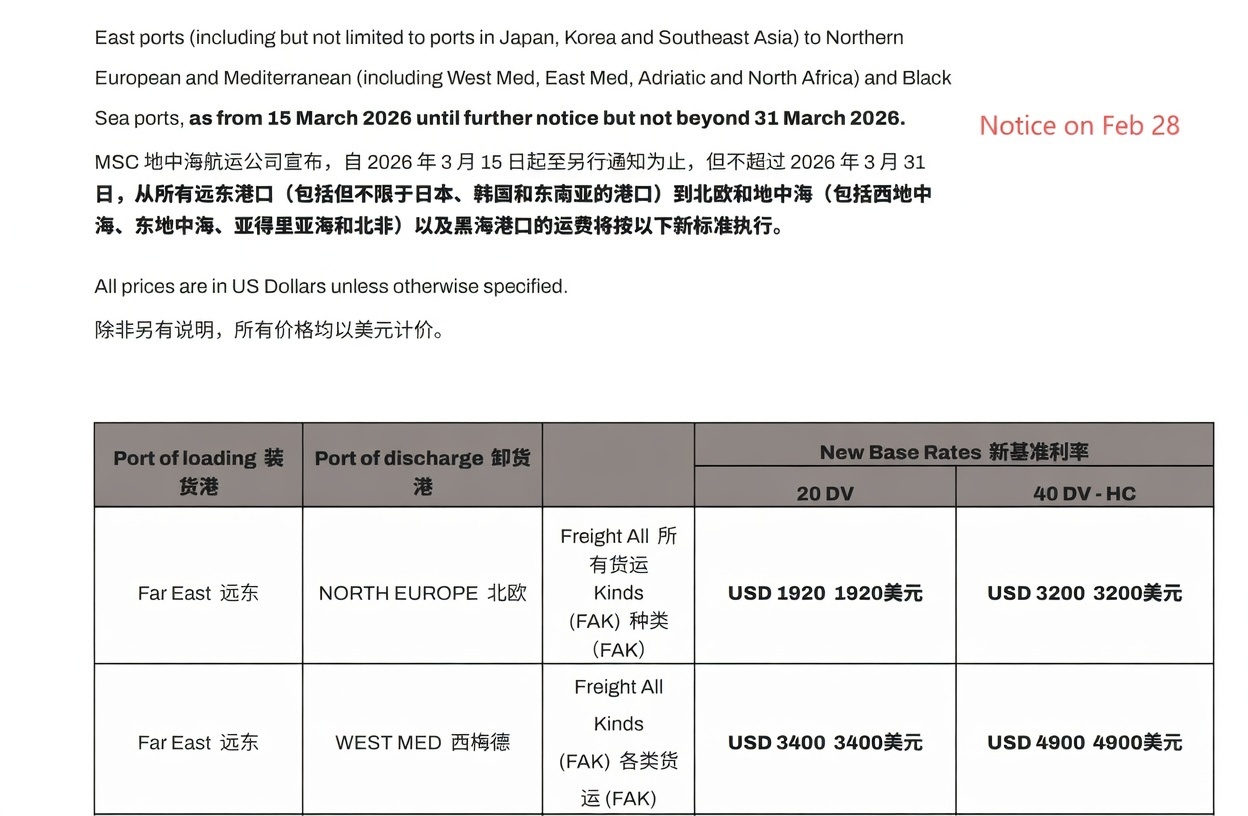
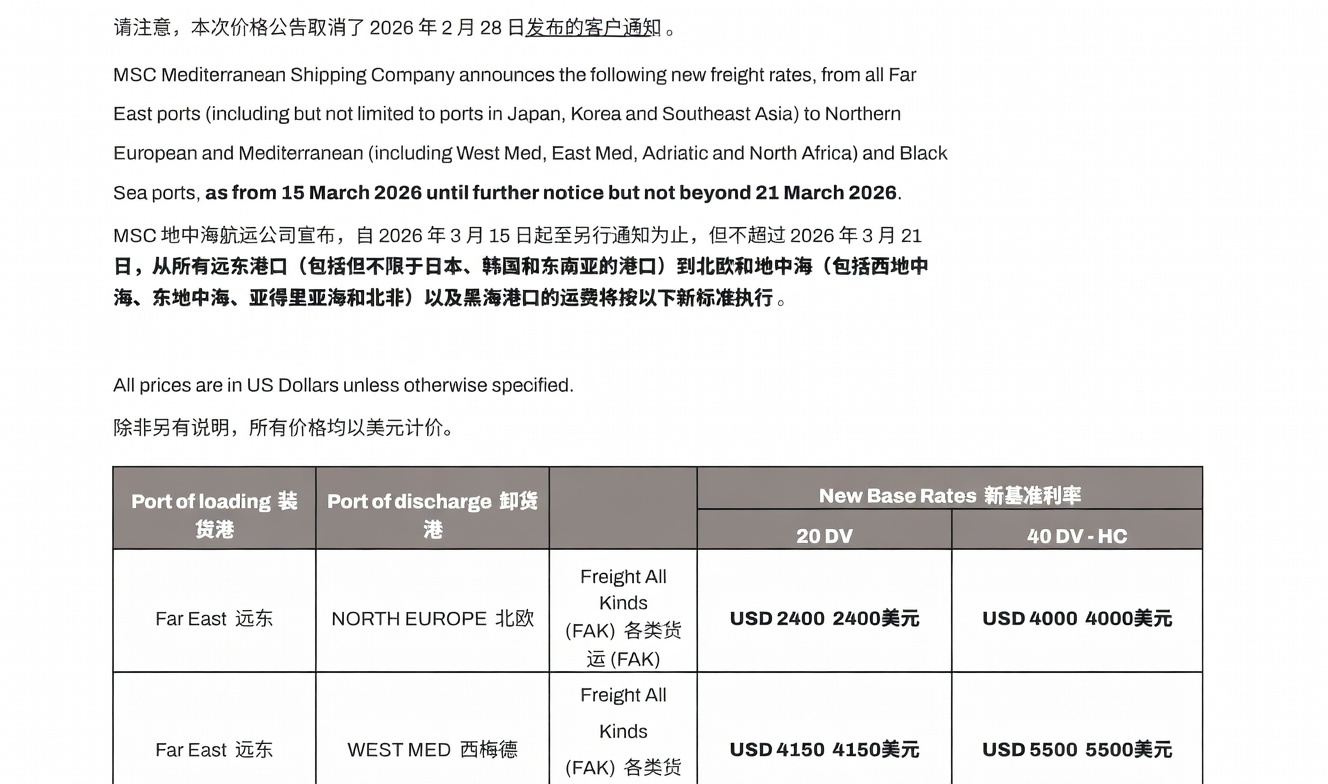
As the world’s largest container shipping company, MSC serves as the ultimate bellwether for the industry. Prior to the severe outbreak of the US-Iran conflict, MSC had already announced a standard rate increase. However, as the war escalated, MSC made an unprecedented move: they immediately invalidated the previous notice. The newly announced ocean freight rates were re-calculated using the original base rates, slapping an additional $800 per TEU across the board, making MSC the aggressive pioneer in this 2026 wave of price hikes.
MSC’s Specific Route Updates:
- Asia to Northern Europe (Effective March 15): Freight rates have surged to $2,400 per 20ft container (TEU) and $4,000 per 40ft container (FEU).
- Asia to Mediterranean Ports (Effective March 15): Rates have spiked to $4,150 per TEU and an astonishing $5,500 per FEU.
- Far East to Sub-Saharan Africa & Indian Ocean (Effective March 10): Encompassing ports in Japan, South Korea, and Southeast Asia, rates to these African/Indian Ocean destinations have been pushed to a maximum of $6,600 per FEU.
2. Maersk: Peak Season Surcharges (PSS) Implementation
Maersk has opted to leverage the PSS mechanism to offset the logistical nightmares caused by the Middle Eastern blockades.
- Asia to India/Nepal/Sri Lanka (Effective March 19): A heavy Peak Season Surcharge will be applied to voyages heading to Visakhapatnam, Kattupalli, Nepal, and Sri Lanka. All container types will incur an additional $1,000 surcharge.
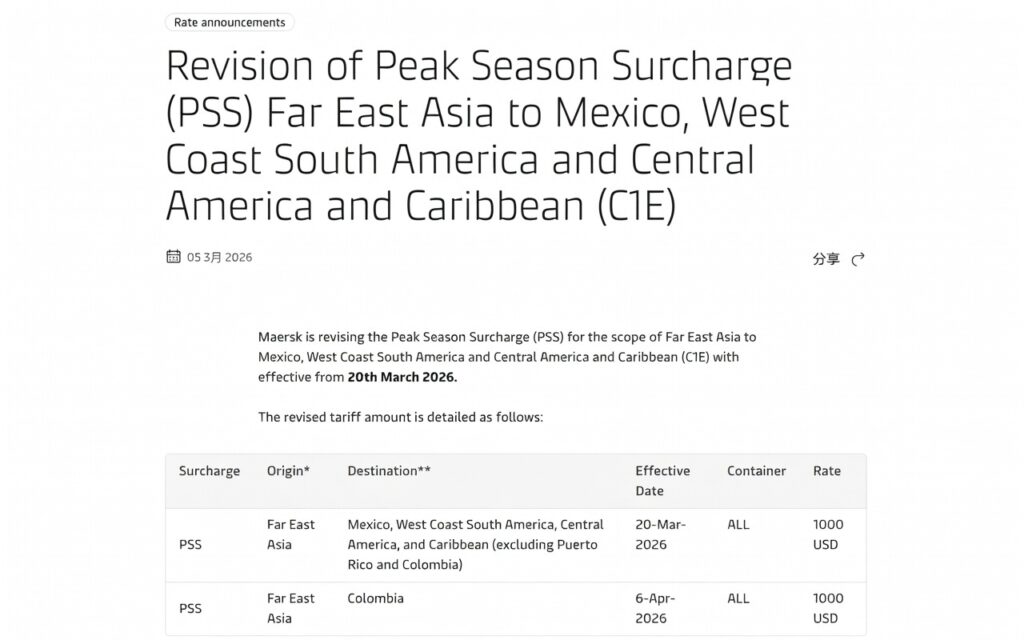
- Asia to Latin America & Caribbean (Effective March 20): Highlighting the global nature of this crisis, routes from Asia to Mexico, the West Coast of South America, Central America, and the Caribbean (excluding Puerto Rico and Colombia) will also see an additional $1,000 PSS applied to all container types.
3. CMA CGM: Sweeping Rate Adjustments
The French carrier CMA CGM has aggressively adjusted its FAK (Freight All Kinds) rates across key East-West and North-South trades.
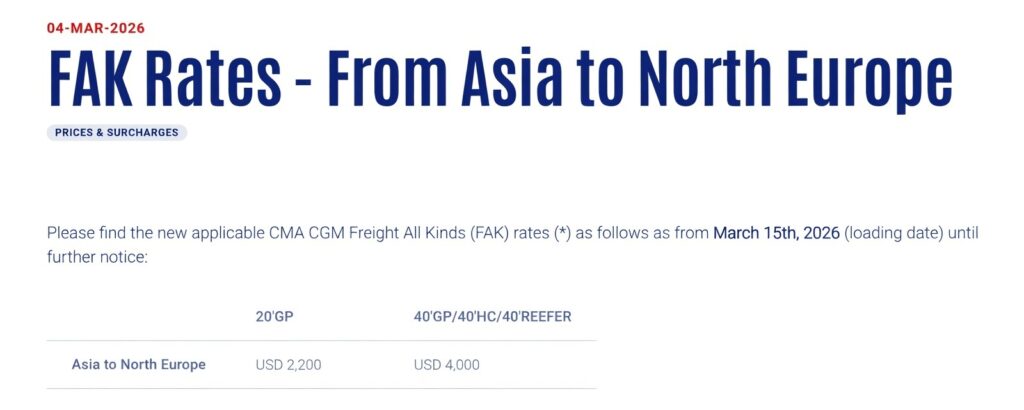
- Asia to Northern Europe (Effective March 15): Rates increased to $2,200 per TEU and $4,000 per FEU.
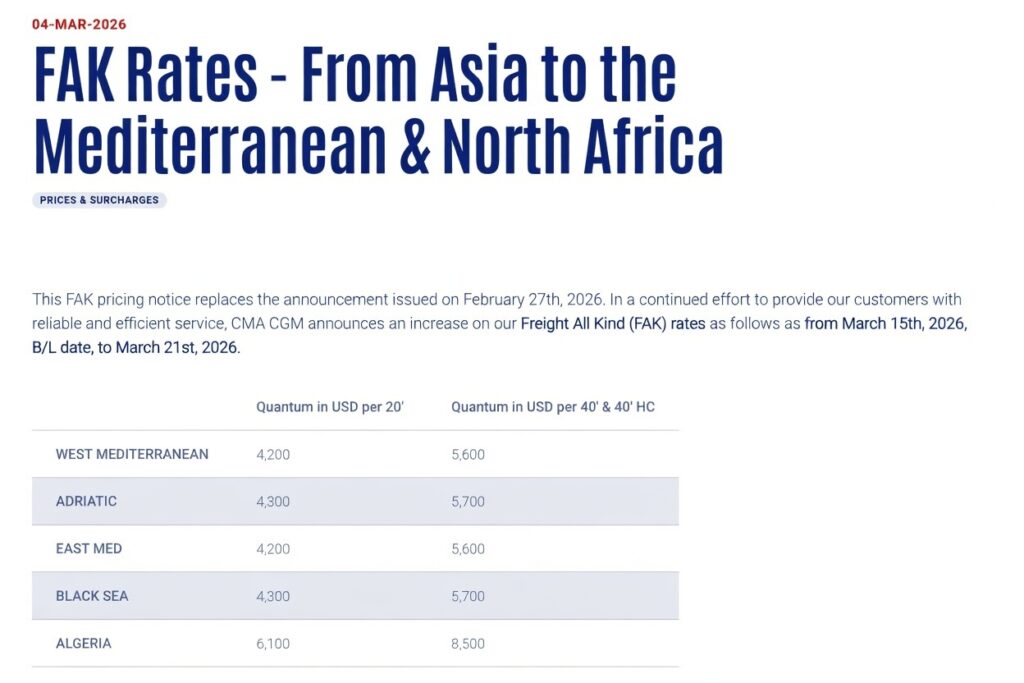
- Asia to Mediterranean & North Africa (Effective March 15): A massive jump, with rates reaching a maximum of $8,500 per FEU.
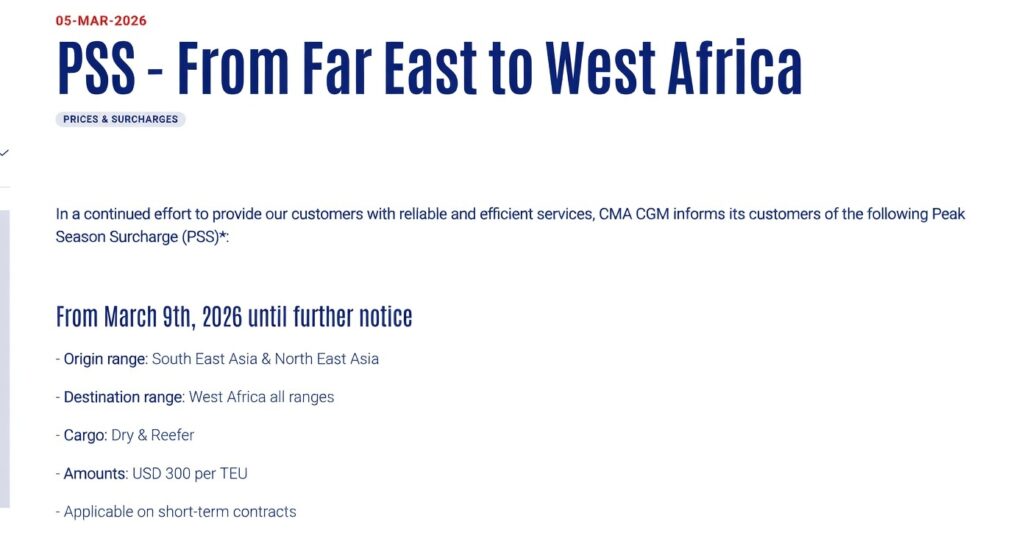
- Asia to West Africa: A direct $300 surcharge per TEU is now mandated for all shipments heading to West African ports.
4. Hapag-Lloyd: Immediate South American & European Hikes
Hapag-Lloyd has warned of severe schedule adjustments and detours, backing these warnings with substantial rate hikes.
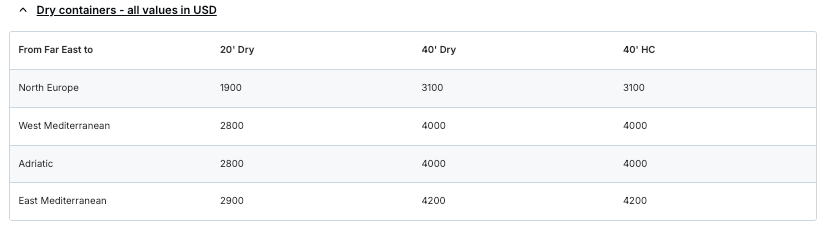
- Asia to Europe & Mediterranean (Effective March 15): Rates increase to a maximum of $3,850 per TEU and $5,500 per FEU.
- Asia to South America (Effective March 1): In one of the earliest implementations, rates increased by an overall average of $1,000 per container.
5. Wan Hai Lines: The Asian Market Indicator
As a crucial indicator for Intra-Asia and Trans-Pacific freight, Wan Hai did not miss out on this wave.
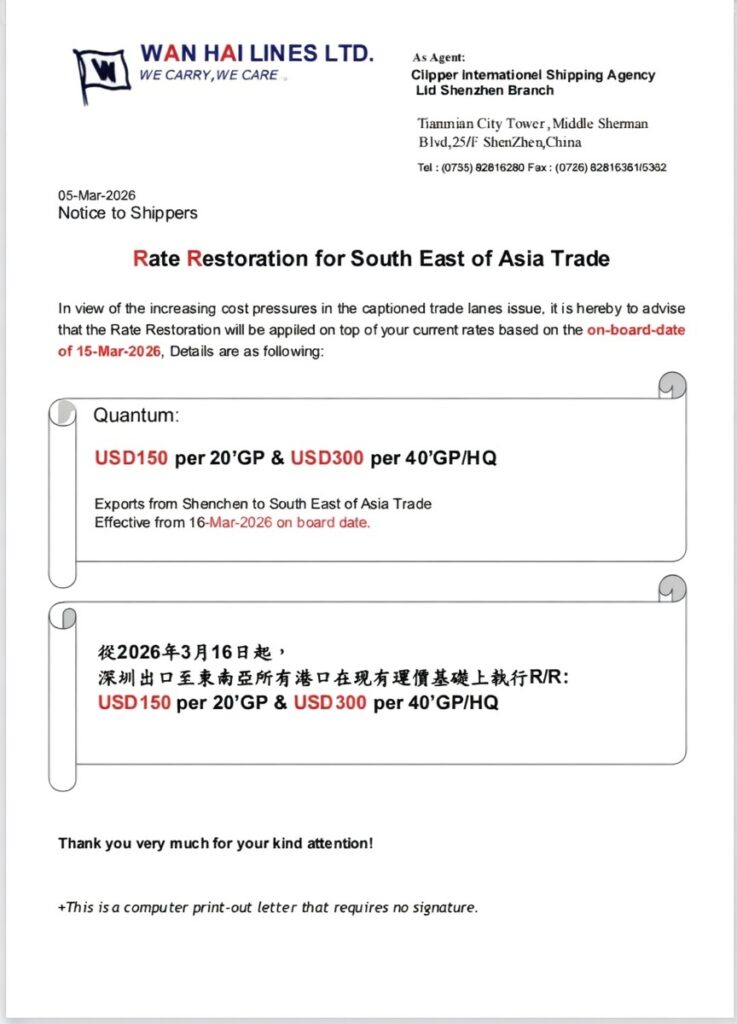
- Asia Regional Routes (Effective Week 12, 2026): Wan Hai announced a price increase of $150 per TEU and $300 per 40-foot FEU.
(Need to lock in your rates before the next GRI? Contact our pricing experts at the Kisun Shipping Booking Desk.)
The Global Market Data View (WCI & Capacity Impact)
To understand the macro picture, we must look beyond individual carrier notices and examine global indices.
According to the latest World Container Index (WCI) released by the respected shipping consultancy Drewry, the global 40-foot container composite index rose 3% to $1,958 in the week ending March 5, 2026. Crucially, this marks the first rebound after seven consecutive weeks of decline.
Specifically, trans-Pacific routes are feeling the heat:
- The freight rate from Shanghai to Los Angeles rose 10% to $2,402 per FEU.
- The freight rate from Shanghai to New York rose 7% to $2,977 per FEU.
The Capacity Paradox
Recent analytics show a fascinating paradox. At the beginning of the crisis, the Persian Gulf region operated approximately 158 container ships with a total capacity of about 691,000 TEU. In the grand scheme of global shipping, this accounts for only about 2.1% of global container shipping capacity.
On paper, a 2.1% disruption should yield a “relatively limited” short-term impact. However, industry insiders—including the logistics analysts at Kisun Shipping—point out that maritime networks are highly interconnected. If the regional situation remains volatile, shipping companies are forced to postpone plans to resume normal Trans-Suez operations. This continuous rerouting around the Cape of Good Hope permanently ties up vessels on the water for longer periods, fundamentally tightening global effective capacity and establishing a high floor for freight rates.
The Core Question – Why Does the Strait of Hormuz Closure Inflate Global Freight Costs?
This is the most common question we receive from clients shipping from China to South America or the US West Coast: “My cargo doesn’t go anywhere near the Middle East. Why am I paying $1,000 more per container?”
As globalization deepens, no country or region exists in isolation. In the global shipping ecosystem, “A single hair can affect the whole body” . Here is the detailed breakdown of why a localized blockade triggers global inflation.
1. The Disruption of the Vessel Loop (The Domino Effect)
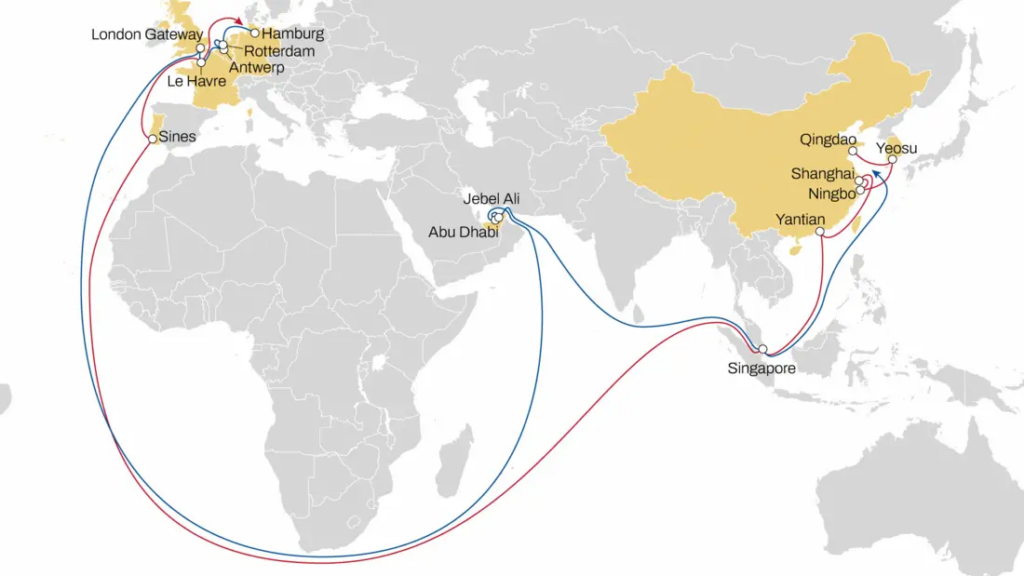
Modern container shipping operates on strictly scheduled “loops.” A massive 20,000 TEU ship doesn’t just go from Point A to Point B; it runs a continuous circuit (e.g., Shanghai -> Singapore -> Jebel Ali -> Rotterdam -> back to Shanghai).
Due to the shutdown of the Strait of Hormuz, over 170 ships (both cargo and tankers) are currently stuck near the Persian Gulf. If one ship cannot follow its original voyage, all subsequent voyage plans for that vessel are destroyed. Because these ships cannot return to Asia as planned to pick up their next load of exports bound for Europe or the Americas, a massive void in capacity is created at origin ports in China and Southeast Asia.
2. Artificial Capacity Shortages & Empty Container Deficits
Insufficient returning ships mean insufficient shipping capacity. In economics, when demand remains steady but supply plummets, prices surge. Furthermore, stranded ships mean stranded empty containers. The global trade imbalance relies on shipping empty boxes back to Asia. With thousands of containers stuck on idle vessels in the Middle East, factories in Asia are suddenly facing equipment shortages, prompting carriers to charge premiums for the limited available boxes.
3. The Energy Shock (Bunker Adjustment Factor)
As we will explore in the next section, the Middle East is the heart of global energy. The blockage of Hormuz sends global crude oil prices skyrocketing. Ships run on bunker fuel. When oil prices rise, shipping lines immediately pass this massive operational cost onto the shipper via the Bunker Adjustment Factor (BAF). Therefore, even a ship sailing strictly between China and Mexico will cost significantly more to operate today than it did last month.
Geographical Deep Dive – What Makes the Strait of Hormuz So Critical?
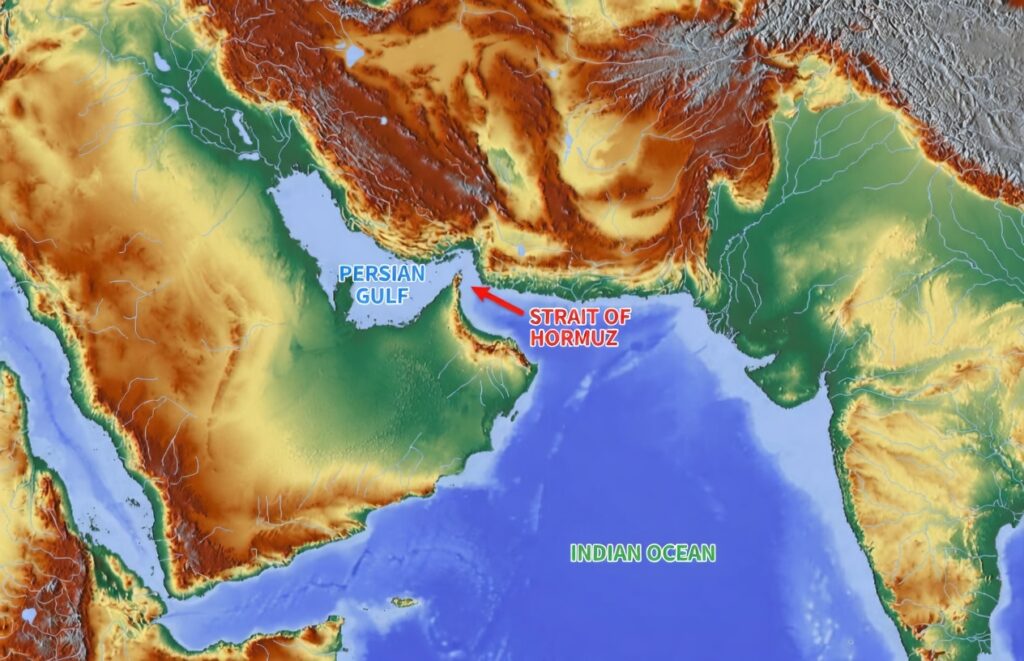
To truly grasp the severity of this crisis, we must look at a map.
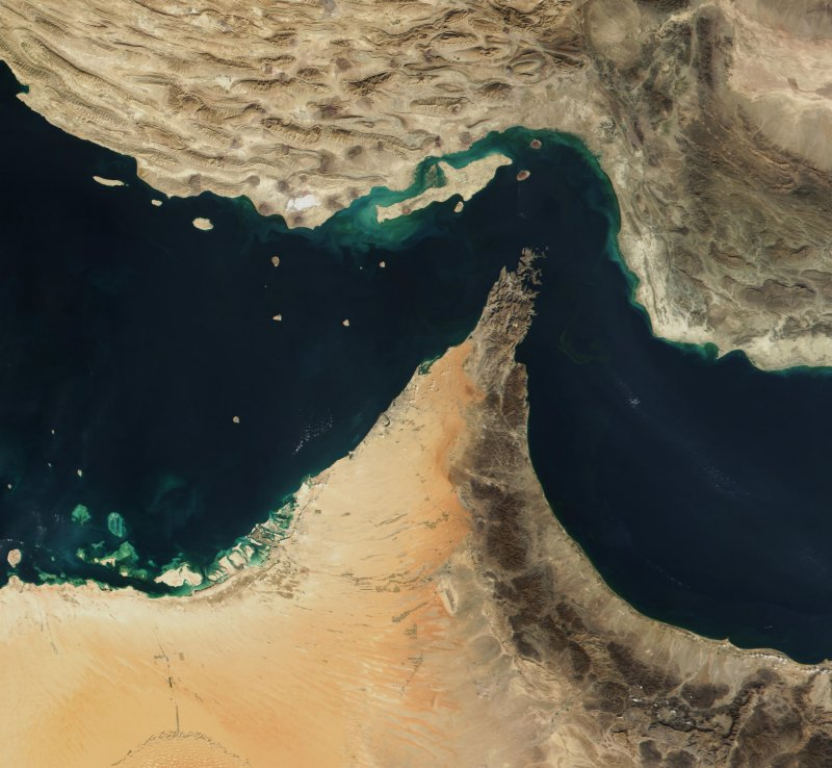
Locating the Strait of Hormuz is not difficult: looking north from the Indian Ocean, there is a sea that extends deep into the Asian continent—the Persian Gulf. At the outlet of the Persian Gulf, the Musandam Peninsula of Oman juts into the sea like a wedge, facing the Iranian coast.
This leaves a narrow gap between them that is about 150 kilometers long and only about 39 kilometers (21 nautical miles) wide at its narrowest point. This is the Strait of Hormuz—the ultimate geographical chokepoint.
The Global Energy Artery
The Persian Gulf is bordered by energy titans: Saudi Arabia to the west, Iran to the north, and the UAE and Oman to the east. All surrounding countries are major global oil producers, and the Strait of Hormuz is their only maritime outlet to the Indian Ocean and the rest of the world.
Statistics show that before the recent conflict, approximately 21 million barrels of crude oil passed through the strait daily. This accounts for:
- 25% of global seaborne oil transport.
- 20% of global liquefied natural gas (LNG) transport.
When this artery is severed, global energy markets panic, directly causing the fuel inflation mentioned earlier.
Navigational Vulnerabilities & Topography
The strait’s physical topography makes it strategically highly vulnerable. The Strait of Hormuz is riddled with shallow shoals, with near-shore waters generally less than 25 meters deep. This allows only a few deep-water channels capable of accommodating fully laden Very Large Crude Carriers (VLCCs) and ULCVs (Ultra Large Container Vessels).
At the narrowest point, to avoid catastrophic collisions, the International Maritime Organization (IMO) has established a strict Traffic Separation Scheme (TSS). Vessels entering and leaving the Gulf use separate channels, each approximately 3 kilometers (2 miles) wide, separated by a buffer zone of the same width.
This means that the actual navigable waters available for giant vessels to pass are incredibly limited. It does not take a massive naval armada to close the strait; a few well-placed threats, drones, or mines in a 3-kilometer channel are enough to halt global trade.
Geopolitical Checkmate
More crucially, there are geopolitical realities. Qeshm Island, the largest island in the Persian Gulf, is located on the northern side of the strait and belongs to Iran. It sits precariously close to the main shipping lanes.
Although the inbound and outbound transit lanes mostly lie within the territorial waters of Oman according to international law, Iran, with its immense geographical advantage and military installations along the northern coastline, is fully capable of influencing, harassing, or entirely blocking passage through the strait—a threat they have now actualized in 2026.
Navigating the Crisis – Kisun Shipping’s Strategy for Importers
The global container shipping market is currently caught in a perfect storm: the dual influence of a seasonal demand recovery (as Asian factories resume post-holiday production) and exploding geopolitical risks.
If Asian exports continue to recover while energy costs climb, the freight rate rebound we are seeing in early March signals that the global shipping market has entered a prolonged period of high volatility.
For global importers and exporters, waiting is not a strategy. Kisun Shipping recommends the following immediate actions:
- Forecast and Book Early (4-6 Weeks Advance): The days of booking a container a week before departure are over. With capacity artificially constrained by the vessel domino effect, secure your space at least a month in advance.
- Budget for Volatility: When calculating your landed costs, build in a buffer for unexpected GRIs, PSS, and rising BAF (Fuel) surcharges.
- Explore Multi-Modal Alternatives: If ocean freight becomes too unreliable or expensive, consult with us about Sea-Air Combined Freight or China-Europe Railway Express options. While more expensive than traditional sea freight, they offer the reliability needed for high-value goods.
- Stay Agile with LCL: If you cannot fill a 40ft container due to factory delays or equipment shortages, consider shifting to LCL (Less than Container Load) shipping to keep your supply chain moving in smaller, more frequent batches.
Conclusion: Partnering with Authority in Uncertain Times
The closure of the Strait of Hormuz is a stark reminder of the fragility of global trade. In 2026, low freight rates are no longer guaranteed, and smooth transit times are a luxury. In this environment, having a logistics partner who understands the deep macroeconomic and geographical currents driving the market is essential.
At Kisun Shipping, we don’t just move boxes; we navigate global complexities to protect your supply chain and your bottom line. We will continue to monitor the carrier rate adjustments and Middle East developments 24/7.
Is your cargo currently caught in the rate hikes? Don’t navigate this crisis alone. 👉 Contact Kisun Shipping’s Global Strategy Team Today for a customized freight audit and secure your capacity before the next GRI hits.

China Logistics Expert
About the Author
Katherine Kang is a China-based logistics consultant with over 11 years of experience in international trade and freight forwarding. Specializing in helping SMEs import from China to the USA, Canada, and Europe, she focuses on compliant, cost-effective solutions to avoid delays, tariffs, and hidden fees. From anti-dumping guidance to CNY planning, Katherine has managed hundreds of shipments, saving clients 15-30% on average.
Connect with Katherine on LinkedIn or contact Kisun Shipping for a free import consultation.