
The Beginner’s Minefield: 5 Critical Logistics Mistakes That Will Drain Your Budget
Global trade is a high-stakes game. For the uninitiated, the excitement of sourcing a great product from an overseas supplier is often dampened by the “hidden monsters” of the shipping world. At Kisun Shipping, we’ve analyzed thousands of shipments to identify the top 5 mistakes that logistics novices make—and how you can avoid them to keep your supply chain lean and predictable.
1. The “Space vs. Mass” Trap: Confusing Gross Weight with Volumetric Weight
This is perhaps the #1 cause of “invoice shock.” Beginners often calculate their shipping budget based on the scale weight (Gross Weight) of their boxes, only to be billed twice as much by the carrier.
The Science of “Chargeable Weight”
In shipping, space is money. A plane or a container has a physical limit on how much weight it can carry, but it also has a limit on the volume (cubic space). A ton of feathers occupies much more space than a ton of lead. To balance this, carriers use a “Chargeable Weight” system, which is the higher of the two:
- Gross Weight: The actual weight of the goods + packaging on a scale.
- Volumetric (Dimensional) Weight: A calculated weight based on the dimensions of the package.
The Formula You Need to Know
For air freight, the industry standard is to divide the volume by a “dim factor” (usually 5000 or 6000, depending on the service).
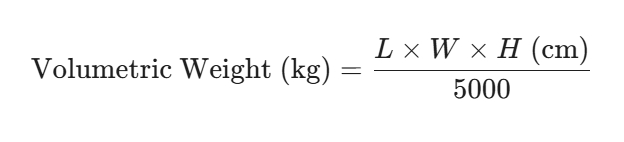
Pro Tip: If you are shipping light but bulky items (like pillows, plastic toys, or empty bottles), your volumetric weight will almost always be higher than your gross weight. Always ask your supplier for the carton dimensions before requesting a quote from Kisun Shipping. You can also check Gross Weight with Volumetric Weight for more detailed information.
2. The “Convenience Trap”: Letting the Factory Arrange the Shipping
It sounds so easy: “Don’t worry, friend, our factory has a ‘special’ shipping partner and will handle everything for you!” For a beginner, this feels like a weight off their shoulders. In reality, you are likely losing control and money.
The Dangers of Factory-Controlled Logistics
- Hidden Markups: Factories are in the business of manufacturing, not logistics. They often add a 10-20% “handling fee” to the freight cost without telling you.
- The “CIF/CFR” Destination Fee Scam: This is the most painful lesson for newbies. The factory offers an incredibly low shipping rate to your port. However, once the cargo arrives, the local agent (who is in cahoots with the factory) hits you with massive, non-negotiable “Document Fees” or “D/O Fees” that can be three times the cost of the actual freight.
- Zero Accountability: If the ship is delayed or the cargo is damaged, the factory has already been paid. They have little incentive to help you track the goods or file a claim.
The Kisun Solution: Work with an independent freight forwarder. By using FOB (Free On Board) or EXW (EX Works) terms, you control costs and have a dedicated partner (us) looking out for your interests at both the origin and the destination.
3. The “Perfect Schedule” Illusion: Failing to Allow Buffer Time
Logistics beginners often plan their inventory based on the “best-case scenario” transit time. If the quote says “30 days,” they expect the goods at their warehouse on day 31. In the volatile world of 2026, this is a recipe for a stock-out.
The Reality of 2026 Disruptions
As we discussed in our recent update on the Strait of Hormuz crisis, the global shipping network is highly fragile. Current factors causing delays include:
- Port Congestion: Massive backlogs in the major China ports like Shanghai and Ningbo.
- Customs Hurdles: The surge in US Customs 5H inspections can add 7-14 days to your timeline unexpectedly.
- Vessel “Blank Sailings”: Carriers often cancel voyages at the last minute to manage capacity.
The Kisun Buffer Rule: Always add at least 14 days of buffer to your lead time for sea freight and 3-5 days for air freight. If you need the goods for a specific holiday or promotion, ship earlier than you think you need to.
4. Penny Wise, Pound Foolish: Neglecting Packaging Quality
We’ve seen clients spend $50,000 on high-end electronics only to try and save $200 by using single-wall cardboard boxes without pallets.
The “Ordinary” vs. “Export” Standard
Domestic packaging in China is not designed for the rigors of the ocean. Your cargo will face:
- Extreme Humidity: Containers can reach 50°C with 90% humidity, causing weak cardboard to collapse.
- Mechanical Stress: Forklifts, cranes, and the constant “tossing” of a vessel in rough seas.
- Multiple Touchpoints: Your box might be moved 5-10 times between the factory and your door.
Must-Haves for Safe Shipping:
- Double-wall corrugated boxes.
- Palletization: This reduces manual handling and protects the bottom of the boxes from moisture.
- Edge Protectors: To prevent straps from crushing the corners of your cartons.
(Protect your investment: Read our guide on Shipping Insurance & Claims.)
5. Incoterm Roulette: Choosing the Wrong Trade Terms
Incoterms (International Commercial Terms) define who is responsible for the cost, risk, and insurance at every stage of the journey. Beginners often default to EXW (Ex Works) because it looks like the lowest price on the factory’s proforma invoice.
The Two Sides of EXW Terms
Under EXW, you are responsible for everything from the moment the goods leave the factory floor. This includes getting the goods through Chinese Customs. If your supplier doesn’t have an export license, you will have to check with your freight forwarder to handle it. But normally it will cause you extra cost. Normally for small shipment like within 100KG, just your test order, EXW is better, but for large cargo, and full container, FOB is much better.
The “Sweet Spot” Terms:
- FOB (Free On Board): The industry standard for a reason. The supplier handles the inland costs and export clearance in China. You take over once the goods are on the ship. It’s the perfect balance of cost and control.
- DDP (Delivered Duty Paid): The “Easy Mode.” The forwarder handles everything, including taxes and duties. Best for Amazon FBA sellers or those who don’t want to deal with customs paperwork.
Check DDP vs FOB vs EXW for more detailed information.
Conclusion: Knowledge is the Best Insurance
Logistics doesn’t have to be a series of expensive lessons. By understanding the relationship between volume and weight, maintaining control over your forwarder, planning for delays, investing in packaging, and choosing the right Incoterms, you are already ahead of 90% of your competitors.
At Kisun Shipping, we don’t just move boxes; we navigate the “mines” for you. We provide transparency where others provide “surprises.”

China Logistics Expert
About the Author
Katherine Kang is a China-based logistics consultant with over 11 years of experience in international trade and freight forwarding. Specializing in helping SMEs import from China to the USA, Canada, and Europe, she focuses on compliant, cost-effective solutions to avoid delays, tariffs, and hidden fees. From anti-dumping guidance to CNY planning, Katherine has managed hundreds of shipments, saving clients 15-30% on average.
Connect with Katherine on LinkedIn or contact Kisun Shipping for a free import consultation.