How to Ship from China to Amazon FBA in 2026: The “Zero-Error” Masterclass
Let’s be real: In 2026, Amazon FBA isn’t just about finding a winning product; it’s about navigating a logistics minefield that gets more expensive and more automated every year.
A single smudge on a thermal label in a Shenzhen warehouse can lead to your entire shipment being flagged at an Amazon Fulfillment Center (FC) in California. You lose two weeks of sales, pay a “manual processing fee,” and watch your IPI (Inventory Performance Index) score tank.
Whether you are looking to ship to amazon fba from china for the first time or you’re a veteran seller trying to optimize for the March 2026 labeling revolution, this guide covers the entire journey—from the factory floor to the Amazon shelf.
Related guides (so you can jump straight to what you need):
The 2026 Labeling Revolution: Your Life-Line
If you ignore everything else, read this. Effective March 31, 2026, Amazon’s labeling standards have entered a “zero-tolerance” phase.
The FNSKU Mandate
In previous years, brand owners could often get away with using manufacturer barcodes (UPC/EAN). In 2026, that door is closing for resellers. Even if your packaging has a perfect UPC, Amazon now strictly requires the FNSKU (Amazon Barcode) for the vast majority of categories to prevent “commingling” issues.
- Pro Tip: Your FNSKU label must completely cover the original UPC. If the scanner sees two barcodes, your product goes into “Unfulfillable” purgatory.
- The “Made in China” Rule: This isn’t just an Amazon rule; it’s a US Customs (CBP) mandate. Every single unit and every outer carton must have “Made in China” printed or stickered on it. Without it? Expect a customs hold and a “marking fine” that eats your Q3 profits.
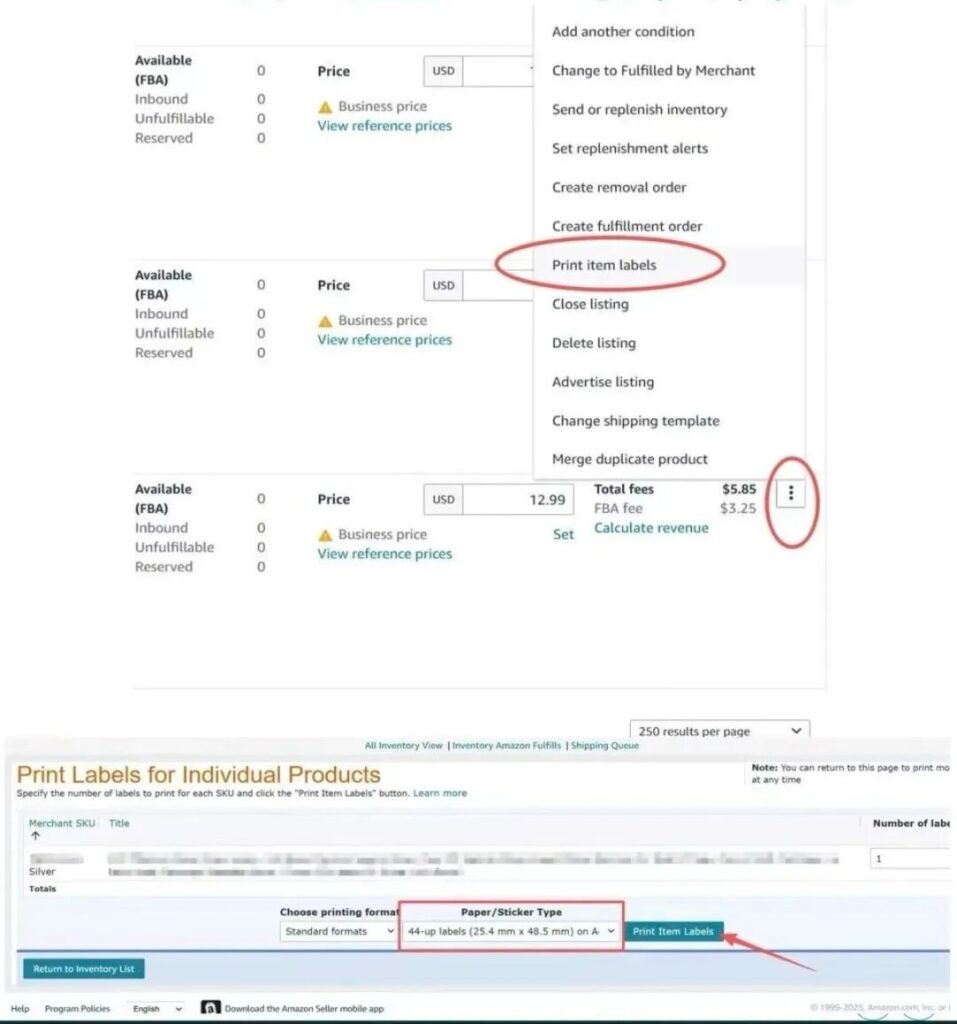
Printing Specs: The Death of Inkjet
If your factory is still using inkjet printers for your Amazon labels, stop them.
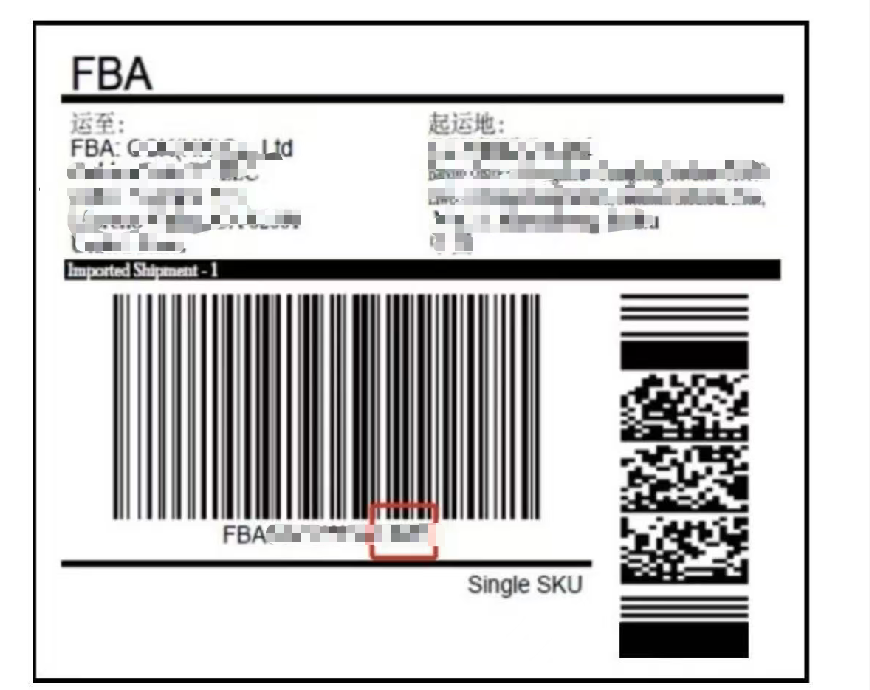
- Thermal Only: Use 300 DPI thermal printers (like Zebra). Inkjet ink smudges when it gets damp in a shipping container. A smudged barcode is a dead barcode.
- Size Matters: Stick to the 1″ x 2″ or 2″ x 3″ standards. Anything smaller and the automated sorters in the FC will miss it.
Phase 1: The “Dashboard Chess” (Creating Your Shipment)
Before a single roll of tape touches a box, you need to win the battle inside Amazon Seller Central.
The Inbound Placement Service Fee (The 2026 Reality)
Amazon now penalizes you for making their life harder. When you create your shipment, you’ll face two main choices:
- Amazon-Optimized Shipment Splits: You send your inventory to 4 or more different locations. Fee: $0. The catch? You have to coordinate 4 separate logistics legs.
- Minimum Shipment Splits: You send everything to one location (usually a massive hub like ONT8 or SMF3). Fee: High. Amazon then moves the goods internally, but they charge you for the privilege.
· Shipping Method: Select either “Small Parcel Delivery” or “Less-Than-Truckload (LTL).” Enter the shipment date and the carrier’s name (if selecting a non-partner carrier, you may enter “Other”).
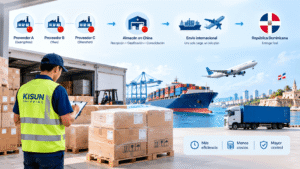
Kisun Strategy: For our high-volume clients, we recommend the “Optimized” route. As your freight forwarder from China to the US, we can handle the consolidation and split-shipping in our China warehouses so you don’t pay that per-unit placement fee.
Phase 2: Packaging as Armor
Your goods are about to travel 7,000 miles, survive three different truck transfers, and endure the heat of a Pacific shipping container. Your packaging needs to be a tank.
Outer Carton Standards
- The 5-Layer Rule: Never use single-wall boxes. Use double-wall (5-layer) heavy-duty corrugated cardboard.
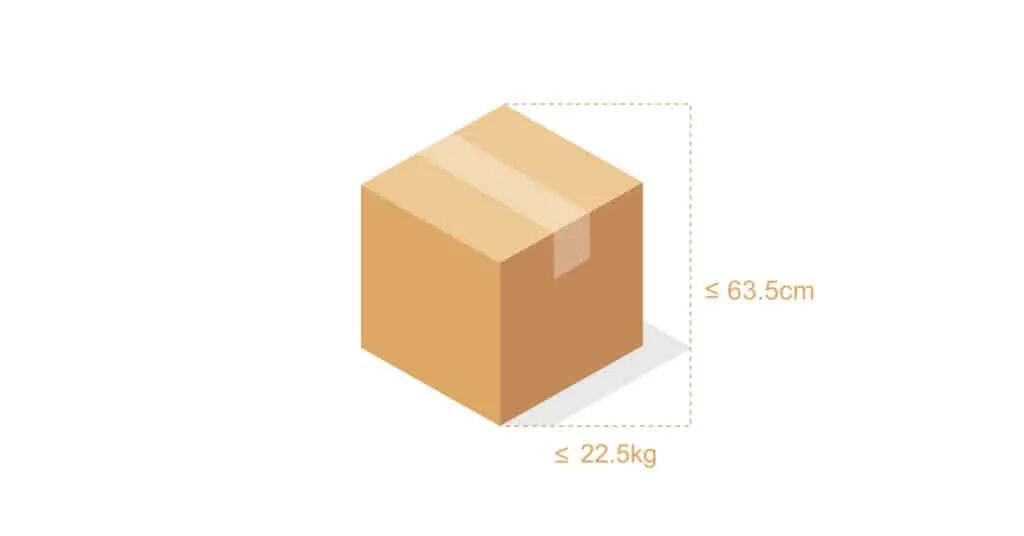
- Weight Limit (The 22.68kg Ceiling): In the US, a single box cannot exceed 50 lbs (22.68 kg). If it’s 51 lbs, you need a “Team Lift” sticker on all sides. If you forget, Amazon might reject the entire pallet.
- The 63.5cm Rule: No side of your box should be longer than 25 inches (63.5 cm) unless it contains a single oversized item.
The “Suffocation” Warning
If you are selling apparel or anything in a polybag with an opening larger than 5 inches, you must have a suffocation warning printed on the bag. This is a massive compliance trap that results in thousands of rejected shipments every month.
Kisun Tips: To aovid package change after goods arrive your freight forwarder warehouse, the best way is to double check with your freight forwarder about the package size and weight requirments, confirm all the details before you place order to supplier. It will cause your extra cost and more days if the package is not meeting the shipping requirements to Amazon.
Phase 3: Choosing Your Logistics Weapon (Sea vs. Air)
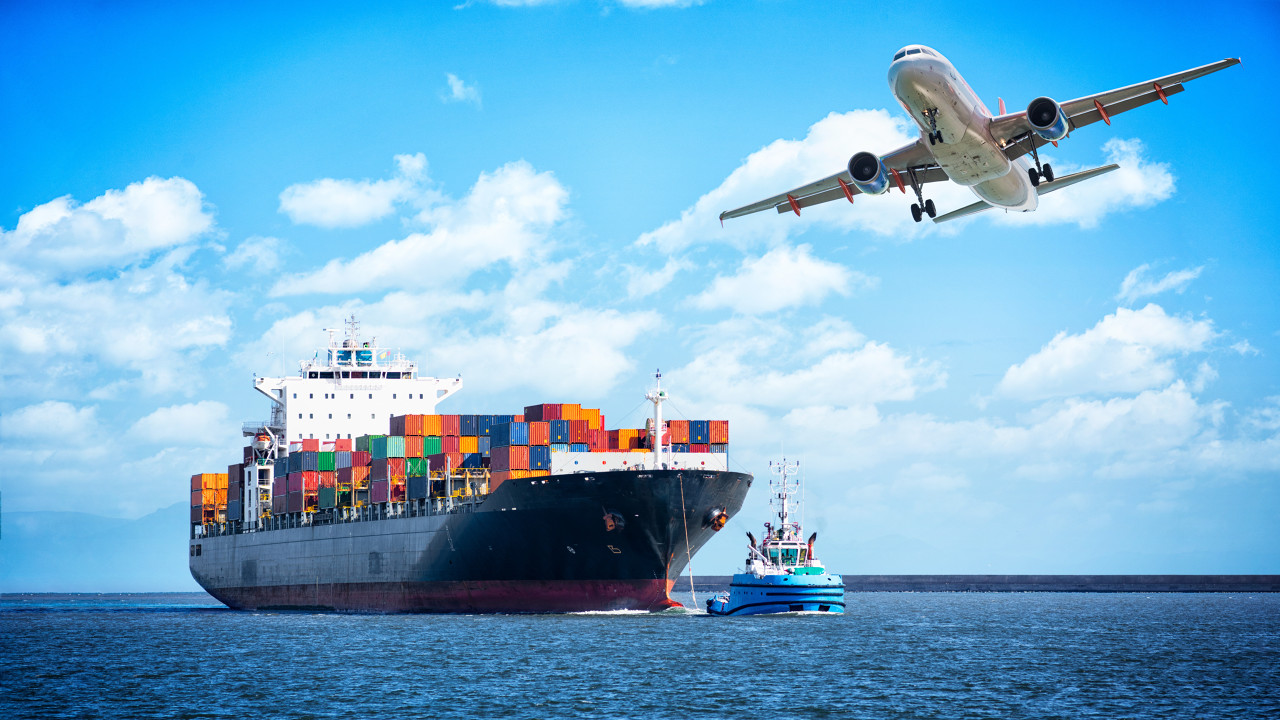
How you ship to amazon fba from china depends entirely on your cash flow and inventory velocity.
| Feature | Air Freight (Express/Line) | Sea Freight (LCL/FCL) |
| Transit Time | 5 – 9 Days | 25 – 40 Days |
| Cost | Premium ($$$) | Economic ($) |
| Best For | Urgent restocks / New launches | Planned inventory / High-volume |
| Min. Weight | 21 kg | 100 kg / 1 CBM |
2026 Sea Freight Reality: The “Matson” Advantage
If you are shipping to the US West Coast, “Sea Freight” doesn’t have to mean 40 days. Using expedited sea services (like Matson) can get your goods from Shanghai to an LA warehouse in as little as 15-18 days. It’s the “middle ground” that most smart sellers are using in 2026 to balance cost and speed.
Phase 4: Customs Clearance & The HS Code Barrier
In 2026, customs authorities are more “data-hungry” than ever.
- The HTS Code: You must provide an accurate 10-digit HTS code for the US (or 12-digit for GCC countries).
- The De Minimis Crackdown: Don’t rely on the “under $800” rule for commercial FBA shipments. US Customs is increasingly classifying FBA inventory as commercial entry, regardless of the individual unit value.
- Kisun Expertise: We ensure your Commercial Invoice and Packing List are bulletproof. If you are also expanding into the Middle East, check out our [Saudi Arabia Customs Guide]—the rules there are even stricter regarding “Religious Sensitivity” and “Surveillance Gear.”
The Final Mile: Delivery to the FC
Once your goods hit the port (Los Angeles, Savannah, or New York), the final hurdle is the Amazon Appointment.
- Carrier Central: As your carrier, we must log into Amazon’s system and book a delivery slot.
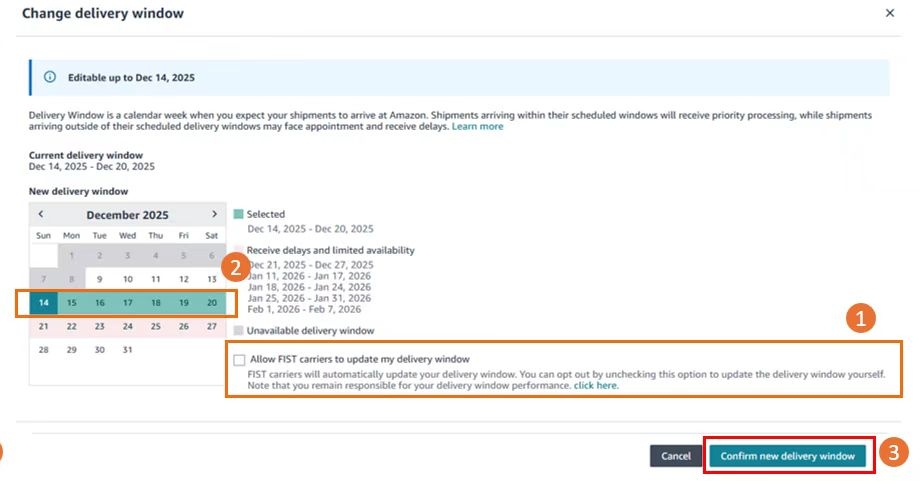
- Delivery Window: If there is an change of original delivery time you choose when you created the shipments, you can change the delivery window, also you can Allow FIST carriers to update estimated delivery times. For updates that fall within the permissible modification window, we will automatically push the revised delivery times directly. This eliminates the need for you to manually edit each entry individually.
- The “Delivered” vs. “Available” Gap: Just because the tracking says “Delivered” doesn’t mean your inventory is live. In peak seasons (Q4), it can take 7 to 14 days for Amazon to move your goods from the loading dock to “Available for Sale.”
- POD (Proof of Delivery): Always keep your signed POD. If Amazon loses your box (it happens), the POD is the only document they will accept for a reimbursement claim.
Amazon FBA Sellers’ Frequently Asked Questions (2026 Selected Edition)
Q: I’m getting hit with a massive “Inbound Placement Service Fee” on Seller Central. If I let Kisun Shipping handle the 4-way split at your China warehouse, is that really cheaper than just paying Amazon to take it all at one location (like ONT8)?

A: In 90% of cases, yes. Amazon’s placement fees in 2026 can eat up to 15-20% of your margin if you ship to a single hub. By using our "Strategic Split" service at our Shenzhen or Ningbo warehouse, we sort your cargo into the 4+ locations Amazon wants before it leaves China. You bypass the placement fee entirely, and even with the extra shipping legs, our clients usually save around $0.30–$0.50 per unit. It’s a no-brainer for high-volume SKUs.
Q: My supplier in Yiwu insists they can just use the manufacturer UPC on the packaging to save time. But with the March 2026 update, I’m worried Amazon will sideline my inventory. Does every single unit really need an FNSKU now?
A: If you are a reseller (non-brand owner), the short answer is: Yes, do not risk it. Starting March 31, 2026, Amazon is far more aggressive about "Inventory Commingling" issues. If you send in goods with only a UPC, you’re looking at "Inbound Defects" or your stock being stuck in "unscannable" limbo. We tell all our clients: have the factory apply the FNSKU. If they won't do it, send the goods to us first—we have a professional labeling team that can over-label your entire shipment in 48 hours.Q: I have a new product launch coming up. Is it better to send 100 units by Air Express and the rest by Sea, or should I just wait and send everything by Matson Fast Ship to save on the 2026 freight rates?
A: Don't put all your eggs in one boat. We always recommend the "Hybrid Launch" strategy. Send a small "pilot batch" (maybe 150-200 units) via Air Freight to get your listing live and start collecting reviews. While those are selling, your bulk inventory should already be on a Matson or Zilong vessel. In 2026, the transit gap is narrowing, but Air still wins for "speed to market." This prevents the "Out of Stock" kiss of death right after your launch.Q: I’ve heard rumors that US Customs is getting stricter about "Country of Origin" markings in 2026. Does "Made in China" really have to be on every single individual unit, or is just having it on the outer master carton enough?
A: This is where many sellers get burned. Both US and Saudi Customs require the origin mark on both the individual product packaging AND the master carton. If a customs officer opens your box and sees blank individual units, they can flag the entire shipment for "Marking Violations." This leads to heavy fines and weeks of delays. At Kisun, we do a "Pre-Shipment Spot Check" for all FBA clients to make sure those three words are visible before the container is sealed.Q: My factory says they can fit more units if they use larger boxes, but each box will weigh around 55 lbs (25kg). Will Amazon actually reject them, or is it just a "warning" on the dashboard?
A: It is not just a warning. In 2026, Amazon’s automated sorting centers are calibrated for safety. If a box hits 55 lbs without a "Team Lift" sticker, or if it exceeds 50 lbs (the standard limit), they may refuse the entire pallet. Even if they accept it, you’ll get an "Inbound Performance Alert" on your account health. We advise staying at 45-48 lbs to allow for scale variance. Don't let a few extra cents in shipping savings ruin your account standing.
China Logistics Expert
About the Author
Katherine Kang is a China-based logistics consultant with over 11 years of experience in international trade and freight forwarding. Specializing in helping SMEs import from China to the USA, Canada, and Europe, she focuses on compliant, cost-effective solutions to avoid delays, tariffs, and hidden fees. From anti-dumping guidance to CNY planning, Katherine has managed hundreds of shipments, saving clients 15-30% on average.
Connect with Katherine on LinkedIn or contact Kisun Shipping for a free import consultation.