U.S. Customs IOR Crackdown 2026: What Importers Need to Know About DDP Shipping and Cargo Returns
The U.S. Customs and Border Protection (CBP) has tightened its verification of Importer of Record (IOR) information since September 18, 2026. For importers shipping from China to the United States, this change has raised concerns about customs clearance delays, invalid IOR numbers, and containers being returned to their origin.
If you currently use DDP shipping, should you be worried? Is DDP still a reliable option? And what should you do if your shipment is already on the way to the United States but your IOR encounters a problem?
The answer is not to avoid DDP altogether. The real issue is whether the IOR handling your shipment is legitimate, properly registered, and able to meet U.S. customs requirements.
In this guide, we explain the latest IOR enforcement measures, why some shipments are experiencing clearance problems, how to respond if cargo cannot be cleared, and what importers should check before booking their next shipment from China.
1. What Changed in U.S. IOR Enforcement on September 18, 2026?
On August 19, 2026, U.S. Customs and Border Protection published a notice titled “Accuracy of Importer of Record Data Submitted to CBP” (91 FR 53627).
The enhanced enforcement measures took effect on September 18, 2026.
Under this policy, CBP may immediately void an Importer of Record (IOR) number if the information submitted on CBP Form 5106 is found to be inaccurate or incomplete.
The information subject to verification includes:
- Importer’s legal name.
- EIN, SSN, or CBP-assigned importer number.
- Mailing address and physical business address.
- Telephone number.
- Email address.
These details must be accurate, complete, and properly associated with the actual importer.
CBP has also reinforced the requirement that customs brokers submitting Form 5106 on behalf of an importer must have a valid Power of Attorney (POA) executed directly with that importer.
This means that simply obtaining an IOR number and a customs bond is no longer enough. The identity and supporting information of the importer must also withstand verification.
Why Does This Matter to Importers?
Some logistics arrangements have historically relied on third-party entities or shared importer information to handle customs clearance for multiple unrelated customers.
When an IOR’s registration information is inaccurate, incomplete, or cannot be properly verified, CBP may void its IOR number.
Once voided, that number is no longer valid for entering merchandise into the United States.
Consequently, shipments relying on that IOR may face customs clearance disruptions.
The risk is no longer limited to an individual shipment being selected for inspection. The compliance status of the actual importer can affect multiple shipments associated with that importer.
For importers, the most important question is now: Who is actually listed as the Importer of Record on your customs entry?
2. Why Are Some DDP Shipments Experiencing Customs Clearance Problems?
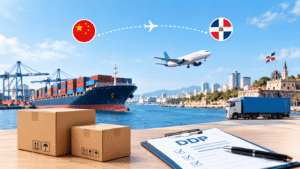
DDP (Delivered Duty Paid) is an Incoterms rule under which the seller assumes responsibility for arranging delivery, import clearance, and applicable import duties and taxes.
However, DDP does not eliminate the need for a legitimate Importer of Record.
The problem arises when the party responsible for customs clearance uses an IOR arrangement that cannot meet U.S. customs requirements.
Several situations deserve attention.
2.1 Unverifiable IOR Information
Some logistics arrangements may use shared addresses, contact details, or importer identities that do not accurately represent the actual IOR.
Under the enhanced enforcement measures, inaccurate or incomplete Form 5106 information can result in the associated IOR number being voided.
If the IOR is no longer valid, the customs broker cannot simply continue using that number to enter new shipments.
2.2 Improper Power of Attorney Authorization
A customs broker must establish its POA directly with the importer it represents.
A freight forwarder cannot simply sign a POA on behalf of an unrelated importer or act as an intermediary to replace the required direct authorization.
This is particularly important for logistics providers offering customs clearance services through third-party importer arrangements.
2.3 Inactive or Voided IOR Accounts
Not every inactive IOR account has been voided because of inaccurate information.
CBP has also introduced procedures for deactivating certain IOR numbers that have not been used to file entries for one or more years and have no outstanding post-entry transactions.
These situations must be distinguished:
- Inactive IOR: An account may be eligible for reactivation through ACE with the assistance of an ABI customs broker.
- Voided IOR: If CBP has voided the number because of inaccurate or incomplete information, the importer must follow the reestablishment procedure provided by CBP.
Do not assume that every IOR problem can be resolved simply by submitting another Form 5106.
2.4 Changing the IOR After a Shipment Has Arrived
When an IOR problem occurs, some importers may consider switching to another importer to complete customs clearance.
However, changing the IOR is not simply an administrative update.
The new importer must have a legitimate legal basis to act as the IOR, accept the relevant responsibilities, and satisfy applicable customs requirements.
The customs broker must also determine whether the proposed change is permissible for the shipment’s current entry status.
Do not assume that replacing the IOR will automatically resolve an existing customs hold.
A new IOR arrangement should be reviewed by a qualified U.S. customs broker before any changes are made.
3. Is DDP Shipping from China to the USA Still Safe in 2026?
Yes. DDP shipping is still a valid delivery arrangement. The September 18 enforcement measures do not constitute a general ban on DDP shipments.
What has changed is the importance of verifying the importer behind the customs clearance arrangement.
DDP is a commercial delivery term, not a substitute for U.S. customs compliance.
A shipment can be arranged under DDP as long as the parties involved properly fulfill their respective responsibilities and the import entry is filed using a legitimate IOR arrangement.
There are two common approaches for importers shipping from China.
Option 1: Use Your Own IOR
If your company regularly imports goods into the United States, you may prefer to establish and maintain your own importer registration.
Depending on your business structure and circumstances, this may involve:
- Obtaining an EIN or other appropriate importer identification number.
- Submitting accurate Form 5106 information.
- Maintaining valid contact and business information.
- Arranging an appropriate customs bond.
- Appointing a licensed U.S. customs broker through a valid POA.
A foreign company may also act as an IOR under applicable U.S. requirements. A U.S.-registered company is not universally mandatory.
This approach provides greater direct control over your import records and customs clearance arrangements.
It is particularly suitable for businesses with frequent shipments and an established U.S. import operation.
Option 2: Use a DDP Service Provider with a Legitimate U.S.-Based IOR
Not every overseas buyer wants to establish and maintain its own U.S. importer registration.
For smaller importers, e-commerce businesses, wholesalers, or companies that do not have a U.S. entity, a properly structured DDP service can still be a practical solution.
The important question is whether the logistics provider has a legitimate and transparent customs clearance arrangement.
Before booking, ask:
- Who will actually be listed as the Importer of Record?
- Is the IOR a legitimate U.S.-based individual or business entity?
- Is the IOR properly registered with CBP?
- Is the customs broker properly authorized to handle the entry?
- Is there an appropriate customs bond for the shipment?
- Who is responsible for duties, taxes, and customs compliance?
- Can the provider explain what happens if CBP requests additional documents or questions the entry?
A reliable DDP provider should be able to explain its customs clearance structure rather than simply promise that everything is included.
At Kisun Shipping, we continue to provide DDP shipping from China to the United States using U.S.-based IOR arrangements.
For customers who do not wish to register their own IOR, we can help coordinate the shipping and customs clearance process through our established U.S. IOR resources.
Our objective is to provide a practical shipping solution while ensuring that the customs clearance arrangement is properly established.
DDP is not the problem. An unreliable IOR arrangement is.
4. What Should You Do If Your Container Is Already Stuck in the USA?
If your container has arrived at a U.S. port but cannot complete customs clearance, do not immediately request a return shipment.
First, determine exactly why the shipment is being held and what its current customs status is.
There are several possible situations:
- The IOR number has been deactivated or voided.
- CBP requires additional importer information.
- The shipment has been selected for examination.
- The commercial invoice or customs declaration contains discrepancies.
- The goods require additional approval from another government agency.
- The shipment is subject to a formal detention or other enforcement action.
Each situation requires a different response.
Important: A Customs Examination Does Not Automatically Mean the Cargo Must Be Returned
A 5H or 9H-related customs status should not be interpreted as an automatic return order.
A customs hold or examination is a review process. The shipment may still be released after the required inspection, documentation review, or compliance verification.
Similarly, a shipment that cannot currently be cleared is not necessarily eligible for immediate re-export.
Before arranging a return, confirm the actual CBP disposition and whether the goods are legally eligible to move.
Step 1: Identify the Exact Reason for the Customs Hold
Ask your customs broker to confirm:
- The current IOR status.
- The entry number and entry status.
- The specific reason for the hold or rejection.
- Whether CBP has issued a formal notice.
- Whether additional documents can resolve the problem.
- Whether the goods remain under CBP custody.
If the problem is an inactive IOR, reactivation may be possible.
If the IOR has been voided, follow the CBP reestablishment procedure.
If the problem relates to product compliance or inaccurate declarations, changing the IOR alone will not solve it.
Step 2: Confirm the Container’s Current Location and Costs
Determine whether the container is:
- At the marine terminal.
- At a bonded warehouse.
- At a customs examination facility.
- At another location under customs control.
Then obtain a detailed breakdown of potential costs:
- Terminal storage.
- Demurrage and detention.
- Examination and handling charges.
- Bonded transportation.
- Warehouse storage.
- Customs broker fees.
- Return ocean freight.
Time matters.
Even if the original customs problem can eventually be resolved, accumulated storage and equipment charges may make the shipment increasingly expensive.
Step 3: Evaluate Whether Clearance or Re-export Is More Practical
Before deciding to return the goods, compare the total cost and feasibility of both options.
Option A: Continue with U.S. Customs Clearance
This may be preferable if the problem is administrative and can be corrected.
For example, additional documentation, an eligible IOR reactivation, or resolution of a customs declaration discrepancy may allow the original shipment to proceed.
However, any change to the importer or entry must be reviewed by the customs broker and, where necessary, CBP.
Option B: Re-export the Goods
If the shipment cannot be cleared or the cost of resolving the problem is unreasonable, re-export may be considered.
However, the appropriate procedure depends on whether the goods have already entered U.S. commerce or remain under CBP control.
Do not book a return vessel before confirming the applicable customs procedure.
5. How Does Returning a Container from the USA to China Work?
Returning a container is more complicated than simply asking the shipping line to send it back.
The required documentation and customs procedures depend on the shipment’s current status.
A typical return operation involves the following stages.
Step 1: Confirm the Customs Status
Determine whether the shipment:
- Has not yet been entered.
- Has an unliquidated consumption entry.
- Is held by CBP.
- Has already been released into U.S. commerce.
This distinction determines the available options.
For example, certain goods that remain under CBP control may qualify for direct exportation or transportation and exportation procedures.
A licensed customs broker should determine the correct filing requirements.
Step 2: Prepare the Return Documentation
Depending on the circumstances, the required documents may include:
- Original commercial invoice.
- Packing list.
- Original or relevant transport documents.
- CBP entry information.
- Return authorization or supporting explanation.
- Letter of Indemnity, if required by the shipping line.
- Applicable customs export or in-bond documentation.
The shipping line should also confirm whether it accepts the proposed return arrangement.
Step 3: Complete the Required CBP Filing
Depending on the shipment’s status, the broker may need to arrange an appropriate in-bond application.
CBP Form 7512 is associated with certain in-bond movements, including transportation and exportation and immediate exportation procedures.
However, it is not a universal return-shipment form.
The broker must determine whether an Immediate Exportation (IE), Transportation and Exportation (T&E), or another procedure applies.
If the goods are held at a bonded facility, bonded transportation may also be necessary.
Step 4: Arrange Transportation and Export
Once the necessary customs authorization and carrier arrangements are in place:
- Arrange transportation to the export terminal.
- Confirm terminal acceptance.
- Complete the required shipping documentation.
- Verify the container number and Bill of Lading details.
- Obtain proof of exportation and ensure applicable in-bond records are properly closed.
Step 5: Handle the Goods at Destination
After the container returns to China, the next steps depend on the reason for the return.
Possible arrangements include:
Option A: Return to China for Inspection or Repair
The importer or exporter must coordinate the appropriate China import customs procedures before the goods can be received and processed.
Option B: Repair or Repack in the United States and Re-export
If legally permitted, the goods may be moved to an appropriate facility for inspection, sorting, repair, or repacking before being exported again.
The feasibility of this option depends on the goods’ customs status and any applicable regulatory restrictions.
Three Risks Importers Should Not Overlook
1. Returning Goods Does Not Automatically Guarantee a Duty Refund
The tax treatment depends on whether duties were paid, whether the goods were formally entered, the reason for export, and the applicable customs provisions.
Do not assume that returning the goods automatically cancels the original duty liability.
2. Return Documentation Must Match the Actual Cargo
Product descriptions, quantities, models, and other identifying information should be consistent with the original shipment records.
Partial returns, repackaging, repairs, or changes in product condition should be properly documented.
3. Delays Can Become More Expensive Than the Original Customs Problem
Terminal storage, demurrage, detention, examination, and additional handling charges can accumulate while a container remains unresolved.
The sooner the actual problem is identified, the more options may remain available.
6. How Can Importers Reduce IOR and DDP Shipping Risks Before Shipping?
Prevention is considerably easier than dealing with a container that has already arrived at a U.S. port.
Whether you use your own IOR or a DDP service provider, consider the following checks.
If You Use Your Own IOR
Before shipping:
- Verify that your IOR number is active.
- Review the accuracy of your Form 5106 information.
- Ensure your business address and contact information are current.
- Make sure you can receive CBP notifications.
- Confirm that your customs broker has a valid POA directly executed with your company.
- Check that your customs bond is appropriate for the shipment.
One important detail: CBP sends IOR voiding notices to the most recently submitted email address. It may also copy the customs broker that last filed an entry for the importer.
Therefore, make sure the registered email address is accurate and monitored.
If You Use a DDP Freight Forwarder
Do not choose a DDP provider based solely on the lowest shipping price.
Before booking, ask the provider to clarify:
- Whether it uses a legitimate U.S.-based IOR.
- Whether the IOR has completed the required importer registration.
- Whether the customs broker has the appropriate authorization.
- Whether the customs bond arrangements are valid.
- Whether duties and taxes are included in the quotation.
- Whether the provider can assist if CBP requests additional information.
A professional logistics provider should be able to explain its customs clearance arrangements clearly.
You do not necessarily need to register your own IOR to ship goods to the United States. However, you should understand who is acting as the importer and how the customs clearance is being handled.
7. Need DDP Shipping from China to the USA? Kisun Can Help.
The latest IOR enforcement measures have changed the way importers and logistics providers should approach U.S. customs clearance.
But they have not eliminated the need for convenient door-to-door shipping solutions.
At Kisun Shipping, we continue to support U.S.-bound shipments through DDP arrangements using U.S.-based IOR resources.
For businesses that do not want to establish their own U.S. importer registration, we can help coordinate:
- Pickup from factories in China.
- Consolidation at our China warehouses.
- Sea freight and air freight.
- U.S. customs clearance through our U.S.-based IOR arrangements.
- Applicable import duties and taxes under the agreed DDP service.
- Final delivery to your warehouse or designated address.
We also work with importers who prefer to use their own IOR and customs broker.
Our recommendation is simple: choose the customs clearance arrangement that fits your business, but make sure the importer behind the shipment is legitimate and properly prepared.
Get a DDP Shipping Quote from China to the USA
If you are planning a shipment or want to review your current DDP arrangement, contact Kisun Shipping.
To help us provide an accurate quotation, please send:
- Pickup city in China.
- Delivery address in the United States.
- Product description.
- Total weight and volume (CBM).
- Shipping method (air or sea).
- Estimated cargo-ready date.
If your container is already facing an IOR-related customs problem, please also provide the current shipment status and available customs documentation.
We can help review the logistics options and coordinate with the relevant parties to determine the next practical step.
Kisun Shipping – China Freight Forwarding and DDP Shipping Solutions for U.S. Importers.

China Logistics Expert
About the Author
Katherine Kang is a China-based logistics consultant with over 11 years of experience in international trade and freight forwarding. Specializing in helping SMEs import from China she focuses on compliant, cost-effective solutions to avoid delays, tariffs, and hidden fees. Katherine has managed hundreds of shipments, saving clients 15-30% on average.
Connect with Katherine on LinkedIn or contact Kisun Shipping for a free import consultation.