
Introduction: Why FCL vs LCL is the First (and Most Expensive) Decision for Importers from China
If you’re a new importer sourcing from China in 2026, staring at a freight quote and wondering “FCL vs LCL—which saves more money for my 5 pallets?” or “How do I calculate the break-even point for a 20GP container?”, you’re not alone. Shipping from China involves hidden costs like import customs duties, destination fees, and consolidation charges that can eat into your margins.
As a China-based freight forwarding expert with 11+ years helping SMEs optimize FCL and LCL shipments to the USA, Canada, Europe, and beyond, I’ve seen countless importers overpay by choosing the wrong strategy. This ultimate guide breaks down FCL vs LCL shipping from China, including freight cost calculator tips, Buyer’s Consolidation strategies to save 30%, 20GP container capacity details, and import customs duties insights.
Whether you’re importing furniture, electronics, or consumer goods, understanding these terms ensures cost-effective, secure logistics. Let’s dive in.
(For more on shipping terms impacting costs, see our DDP vs FOB vs EXW Guide.)
What is FCL (Full Container Load) Shipping from China?
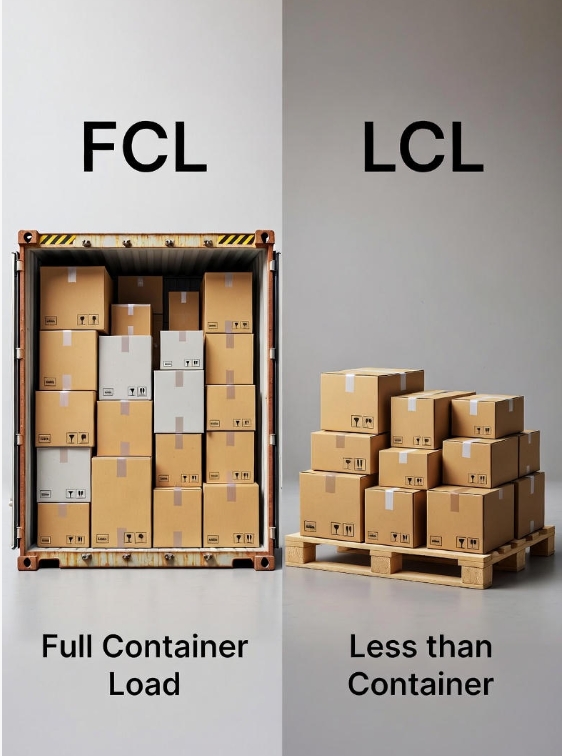
FCL shipping from China means booking an entire container for your goods—think of it as chartering a private taxi. You pay a flat rate regardless of how full it is, giving you full control and security.
Key FCL Features
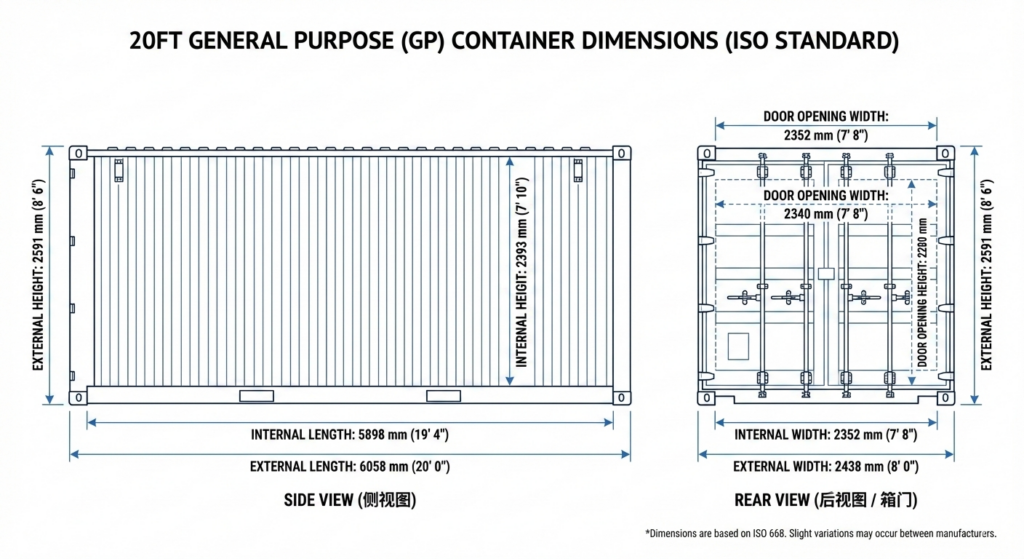
- Container Types: 20GP (standard 20-foot, ~28-29 CBM capacity), 40GP, or 40HQ for taller items.
- Seller Role (under FOB): Handles loading at origin.
- Buyer Benefits: No sharing with others—reduces damage risks and speeds up transit.
FCL is ideal for volumes over 15 CBM, minimizing import customs duties surprises by simplifying clearance.
What is LCL (Less than Container Load) Shipping from China?
LCL shipping from China is like taking a bus—you pay by volume (CBM) and share the container with other importers’ cargo.
Key LCL Features
- Pricing Basis: Per CBM or weight (whichever higher).
- Process: Goods consolidated at origin CFS (Container Freight Station), de-consolidated at destination.
- Challenges: Higher per-unit costs due to handling fees; risk of delays if co-loaded shipments have issues.
LCL suits small shipments (<13 CBM), but watch for escalating import customs duties on mixed cargo.
FCL vs LCL: Key Differences and Freight Cost Comparison
Here’s a quick FCL vs LCL shipping from China comparison table for 2026 rates (estimates based on Shanghai to Los Angeles route):
| Aspect | FCL (20GP Container) | LCL (Per CBM) |
|---|---|---|
| Cost Structure | Flat rate (~$3,000-5,000) + fixed fees | $50-100/CBM + variable handling |
| Volume Suitability | 15+ CBM (20GP capacity: 28-29 CBM) | 1-13 CBM |
| Control & Security | High (dedicated container) | Low (shared with others) |
| Transit Time | Faster (direct) | Slower (consolidation/de-consol) |
| Import Customs Duties | Simpler (one entry) | Complex (mixed cargo scrutiny) |
| Hidden Risks | Overage if overloaded | Destination fees ($200-500 extra) |
FCL often wins on total landed cost for medium volumes, especially with rising 2026 ocean freight rates from China.
The Break-Even Point: When to Switch from LCL to FCL (20GP Container Capacity Explained)
The FCL vs LCL break-even point is around 13-15 CBM. Below 13 CBM, LCL shipping from China is cheaper. At 13-15 CBM (the “red zone”), LCL’s destination fees often exceed FCL’s flat rate.
20GP Container Capacity Breakdown
- Usable Volume: 28-29 CBM (after palletizing/wastage).
- Weight Limit: 28 tons gross (but check carrier rules).
- Example: For 14 CBM furniture, LCL might cost $1,400 ocean + $800 destination fees = $2,200. FCL 20GP: $3,000 flat – but no extras, and faster.
Hidden Costs in LCL vs FCL: Import Customs Duties and Destination Fees
LCL’s appeal (low ocean rate) hides traps like CFS fees ($50-100/CBM destination) and import customs duties delays on shared containers.
FCL avoids this—single entry simplifies duties. In 2026, with US anti-dumping on Chinese goods, FCL reduces scrutiny risks.
Case Study: A client with 15 CBM paid $1,200 LCL but $700 extra in de-consol fees + destination port charges. Switched to FCL—saved 25%.
So when you receive the sea freight rates quotes, DO NOT just check the sea freight rates only, but also check the destination port charges, for example, from Shenzhen port to Aarhus, Denmark, sea freight rates port to port is usually only USD 10~30/CBM, but the destination port charges are high as below:

Strategic Savings: Buyer’s Consolidation for Shipping from China
Buyer’s Consolidation turns multiple LCLs into one FCL, saving 30% on shipping from China.
How It Works
- Collect goods from suppliers at one warehouse (e.g., Shenzhen for south China).
- Load into 20GP—pay one set of fees.
Benefits
- Cuts import customs duties entries.
- Leverages 20GP capacity efficiently.
- North vs South China: South (Shenzhen) cheaper labor/warehousing.
Pro Tip: For multi-supplier imports, this beats separate LCLs every time. Kisun Shipping offers consolidation and warehouse services.
Common Mistakes New Importers Make with FCL vs LCL
- Ignoring Destination Fees: LCL looks cheap until $300+ extras hit.
- Overestimating 20GP Capacity: Wastage reduces to 25 CBM—plan pallets.
- Skipping Buyer’s Consolidation: Multi-supplier LCLs multiply duties.
2026 Trends in FCL vs LCL Shipping from China
- Rising rates favor FCL for volumes >10 CBM.
- Sustainability: Eco-containers in FCL reduce carbon footprint.
- Tech: AI freight cost calculators for real-time quotes.
Frequently Asked Questions (FAQ) on FCL vs LCL Shipping from China
What's the difference between FCL and LCL shipping from China?
  FCL is dedicated container; LCL is shared by volume.
When is the break-even point for 20GP container capacity?
Around 13-15 CBM—FCL saves beyond that.How do import customs duties affect FCL vs LCL?
FCL simplifies single entries; LCL risks mixed cargo delays.What's Buyer's Consolidation in shipping from China?
Merging supplier goods into one FCL to cut costs.What if my LCL cargo is damaged?
Because LCL is packed with other heavy/sharp cargo, damage is more common. Ensure your supplier uses export-grade pallets and shrink wrap. Proper insurance is non-negotiable.Can I ship Amazon FBA via LCL?
Yes, we offer LCL shiping service from China to amazon FBA warehouse, lots of our customers starts shipping from few boxes.What's the sea freight cost for FCL vs LCL 2026 from China?
Sea freight rates keeps changing, contact Kisun Shipping for a quick quote!How to Choose Between FCL and LCL for Your Next Import from China
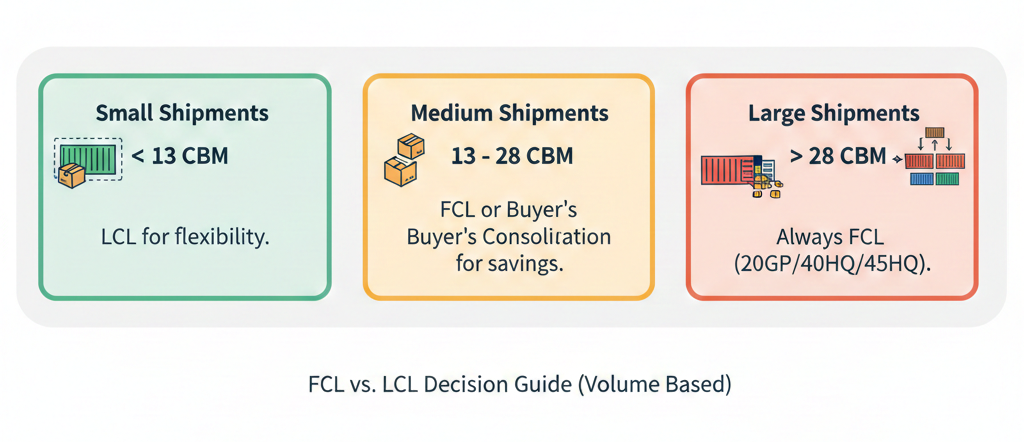
- Small (<13 CBM): LCL for flexibility.
- Medium (13-28 CBM): FCL or Buyer’s Consolidation for savings.
- Large(>28CBM): Always FCL 20GP/40HQ/45HQ.
Final Thoughts: Optimize Your FCL vs LCL Strategy for Shipping from China
Mastering FCL vs LCL shipping from China, leveraging Buyer’s Consolidation, and using a freight cost calculator can slash costs by 30%. Don’t let hidden fees derail your imports.
At Kisun Shipping, we specialize in tailored solutions for SMEs. Send your packing list for a free FCL vs LCL comparison, including 20GP container capacity estimates and import customs duties guidance.

China Logistics Expert
About the Author
Katherine Kang is a China-based logistics consultant with over 11 years of experience in international trade and freight forwarding. Specializing in helping SMEs import from China to the USA, Canada, and Europe, she focuses on compliant, cost-effective solutions to avoid delays, tariffs, and hidden fees. From anti-dumping guidance to CNY planning, Katherine has managed hundreds of shipments, saving clients 15-30% on average.
Connect with Katherine on LinkedIn or contact Kisun Shipping for a free import consultation.