Avoid 100%–300% Hidden Import Taxes When Shipping from China to Canada
Many importers shipping from China to Canada assume their landed cost is simply:
product cost + ocean freight from China + basic import duty + 5% GST
But in reality, for certain product categories, especially furniture, steel, and mattresses, this calculation is incomplete and often dangerously misleading.
The missing factor is Canada’s anti-dumping and countervailing duty system under SIMA (Special Import Measures Act).
We recently handled a case where a full container of dining chairs imported under standard China to Canada shipping routes was unexpectedly reclassified by CBSA. The final landed cost increased by more than 180%, completely eliminating the importer’s profit margin.
This guide explains how SIMA works, which products are at risk, and how importers can avoid costly mistakes before booking China to Canada freight rates or placing factory orders.
1. What Are Canadian Anti-Dumping Duties (SIMA)?
Under the Special Import Measures Act (SIMA), the Canadian government protects domestic industries from unfair foreign competition. If a foreign manufacturer sells goods into Canada at prices lower than their home market or below their total production cost, it is legally defined as “dumping.” Similarly, if foreign governments provide actionable financial assistance to exporters, it is categorized as an illegal subsidy.
| Product | Risk |
|---|---|
| Sofa | 🔴 Very High |
| Office Chair | 🔴 Very High |
| Mattress | 🔴 Very High |
| Steel Pipe | 🔴 High |
| Clothing | 🟢 Usually No |
| Electronics | 🟢 Usually No |
Two regulatory bodies jointly enforce these measures:
- The Canada Border Services Agency (CBSA): The CBSA manages the operational side of enforcement. They track incoming cargo, conduct audits, run administrative reviews, and collect the necessary trade remedy duties at the border.
- The Canadian International Trade Tribunal (CITT): The CITT is a separate judicial body that determines whether dumped or subsidized imports have caused material injury to Canadian manufacturers.
When a product category is subject to active SIMA measures, the standard tax calculations change completely:
Total Border Tax = Standard Canada Import Duty+ Anti-Dumping Duty + Countervailing Duty}+Canada GST
For high-risk categories, the combined SIMA penalty rates frequently range from 100% to over 300% of the cargo’s transaction value.
2. Anti-Dumping vs. Normal Import Duty
A common point of confusion when planning shipping from China to Canada is the difference between standard tariffs and trade remedy assessments.
| Tax Characteristic | Standard Canada Import Duty | SIMA Anti-Dumping & Countervailing Duty |
| Primary Regulatory Purpose | Standard government revenue collection and baseline trade protection. | Targeted trade remedies designed to penalize unfair pricing and subsidies. |
| Calculation Method | Calculated as a fixed percentage based on the product’s HS code Canada classification. | Calculated based on the difference between the export price and the CBSA-approved Normal Value. |
| Average Rate Range | Typically ranges from 0% to 9.5% for most standard consumer products. | Frequently ranges from 100% to 200%+ for uncooperative manufacturers. |
| Retroactive Assessment | Rarely adjusted after entry unless a formal classification audit occurs. | Subject to retroactive adjustments for up to two years following administrative reviews. |
Your standard Canada tariff is predictable and tied directly to your product classification. In contrast, an anti-dumping tax operates as a punitive trade remedy.
If your supplier does not have an established, company-specific Normal Value calculation approved by the CBSA, the agency will automatically apply the highest available ministerial specification rate to your shipment.
3. Sourcing Verifications: What to Check Before Paying Your Supplier
We have met many customers who come to us to ship furniture products, but when we check with the customer, it turns out the supplier doesn’t have any qualifications, and the customer has already paid and come to ask us about shipping when the product is about to be ready. How to save this trouble? Before wire-transferring a deposit to a new manufacturing partner, you need to verify their actual regulatory standing with the CBSA. Use this direct checklist during your negotiations:
- Request the Factory’s Official CBSA Exporter ID Number
- Why it matters: Verified suppliers who cooperate with Canadian trade reviews receive a unique tracking identifier. If a vendor cannot provide this number or refuses to share it, they are almost certainly subject to high uncooperative tax rates.
- Audit the Complete Supply Chain Transparency
- Why it matters: If you buy through a trading company in Hong Kong or Ningbo rather than directly from the manufacturing facility, the CBSA may invalidate the company’s specific Normal Value and apply standard punitive rates instead.
- Secure a Binding Custom Materials Declaration
- Why it matters: Require your supplier to sign a formal product composition statement detailing precise foam densities, steel grades, and frame materials. This document gives your customs broker the technical data needed to defend your entry during a border audit.
4. High-Risk Products When Shipping from China to Canada
Not all goods are affected equally. Certain industries are repeatedly targeted by CBSA enforcement.
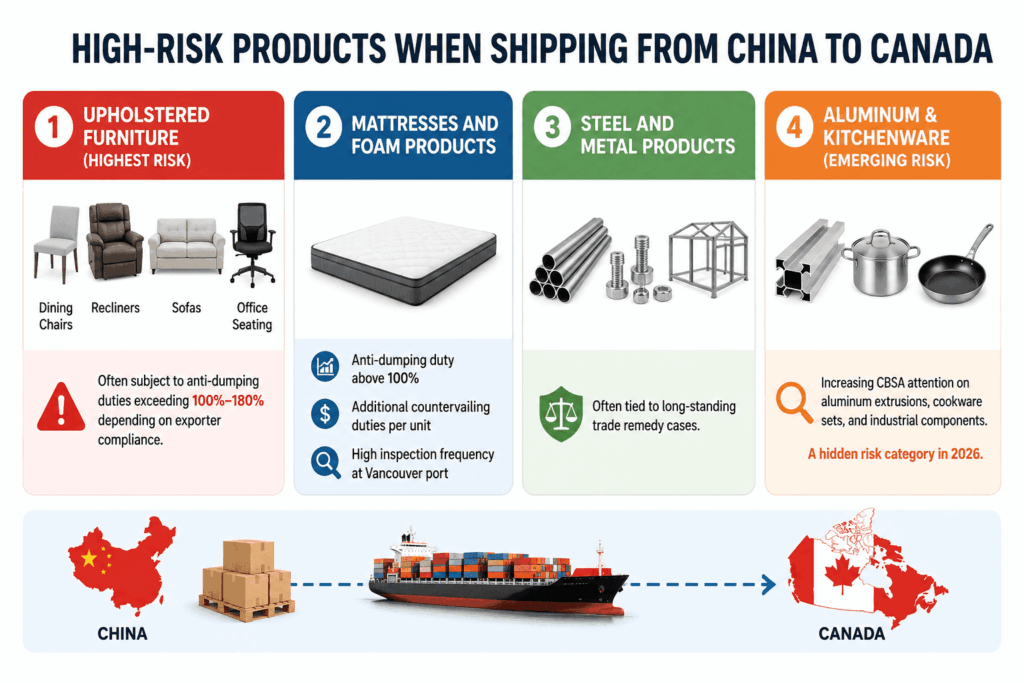
1. Upholstered Furniture (Highest Risk)
This includes:
- Dining chairs
- Recliners
- Sofas
- Office seating
This category is often subject to anti-dumping duties exceeding 100%–180% depending on exporter compliance.
2. Mattresses and Foam Products
Mattresses imported from China are one of the most heavily restricted categories.
Typical risks:
- Anti-dumping duty above 100%
- Additional countervailing duties per unit
- High inspection frequency at Vancouver port
3. Steel and Metal Products
Commonly affected products:
- Carbon steel tubing
- Fasteners
- Steel frames
- Construction materials
These products are often tied to long-standing trade remedy cases.
4. Aluminum & Kitchenware (Emerging Risk Category)
Increasing CBSA attention on:
- Aluminum extrusions
- Cookware sets
- Industrial components
This category is becoming a hidden risk for importing from China to Canada in 2026.
5. Operational Pitfalls: Real-World Importer Case Studies
To understand how these regulations affect everyday operations, let’s review two common scenarios where importers run into unexpected issues at the border.
Case Study 1: The Mattress Sourcing Oversight
An e-commerce brand arranged LCL shipping China Canada for a batch of premium memory foam mattresses, intending to utilize standard door to door shipping China Canada services. The brand assumed their landed cost calculations only needed to account for the standard import tax Canada and baseline ocean freight rates.
Because the supplier was an uncooperative trading company without a verified CBSA Normal Value, the shipment was flagged during Canada customs clearance at port. The cargo was assessed with the standard 146.6% anti-dumping duty and a flat countervailing fee for every piece. This unexpected tax adjustment wiped out the product’s entire profit margin and left the inventory stranded at the terminal.
Case Study 2: The “Regular Seating” Classification Mistake
A commercial buyer imported a full shipping container from China filled with upholstered chairs for a corporate project. They reviewed their commercial invoice Canada documents and classified the goods as standard dining furniture, assuming they were outside the scope of active trade remedies.
During a routine audit by the Canada Border Services Agency, inspectors discovered the chairs featured integrated foam cushioning and faux-leather coverings, which brought them directly under the Upholstered Domestic Seating (UDS) enforcement scope. The CBSA reclassified the cargo under a high-risk tariff code and issued a retroactive tax assessment based on the 188% punitive rate, demonstrating that product design matters more than descriptions on a shipping manifest.
6. Why Freight Forwarders Usually Don’t Warn You About Anti-Dumping Risks
Many businesses wonder why their international logistics providers don’t flag these risks during the initial booking process.
The answer lies in the division of operational responsibilities. A freight forwarder’s primary role is to manage physical transit, container logistics, and secure competitive China to Canada freight rates. They evaluate cargo based on weight, volume, and equipment type (such as standard 40ft HC containers versus specialized chassis).
| Role | Responsibility |
|---|---|
| Freight Forwarder | Ocean freight from China, booking, logistics |
| Customs Broker | HS code, SIMA compliance, CBSA declarations |
Your forwarder can provide accurate quotes for China to Vancouver shipping or China to Toronto shipping, but they rarely audit the specific manufacturing details of your supplier.
Managing customs compliance requires a licensed Canada customs broker who looks closely at materials, chemical compositions, and specific trade remedy listings. Assuming a freight forwarder will catch specialized trade policy details is a common risk for inexperienced importers.
7. Can DDP Shipping Avoid Canadian Anti-Dumping Duties?
As cross-border e-commerce grows, many brands rely heavily on Delivered Duty Paid (DDP shipping Canada) arrangements. Under standard DDP terms, the seller assumes responsibility for international transport, export formalities, and destination clearance costs. This leads some buyers to believe they are fully insulated from trade remedies.
This is an expensive misconception.
If the CBSA flags an incoming container for a SIMA violation, they look past the surface shipping terms to find the actual Importer of Record (IOR).
Whether you source products under EXW shipping China terms, manage logistics via FOB China, or choose a full DDP structure, you cannot contractually bypass federal anti-dumping enforcement.
8. What Happens If Customs Stops Your Container?
If your shipment is flagged for a SIMA inspection during Canadian customs clearance, the enforcement process follows a strict legal timeline:
Step 1: System Flag
HS code or exporter matches SIMA database
Step 2: Port Hold
Container detained at Vancouver or Toronto
Step 3: Document Request
CBSA requests:
- Factory cost breakdown
- Material invoices
- Supplier production records
Step 4: Final Assessment
If data is insufficient:
- Maximum SIMA rate applied automatically
Additional Risk: AMPS Penalties
Canada’s Administrative Monetary Penalty System may:
- Issue fines for incorrect declarations
- Review past imports up to 2 years back
9. How to Check for SIMA Coverage Before Placing an Order
To protect your investments, your procurement team should run a systematic compliance check before signing any international purchasing contracts.
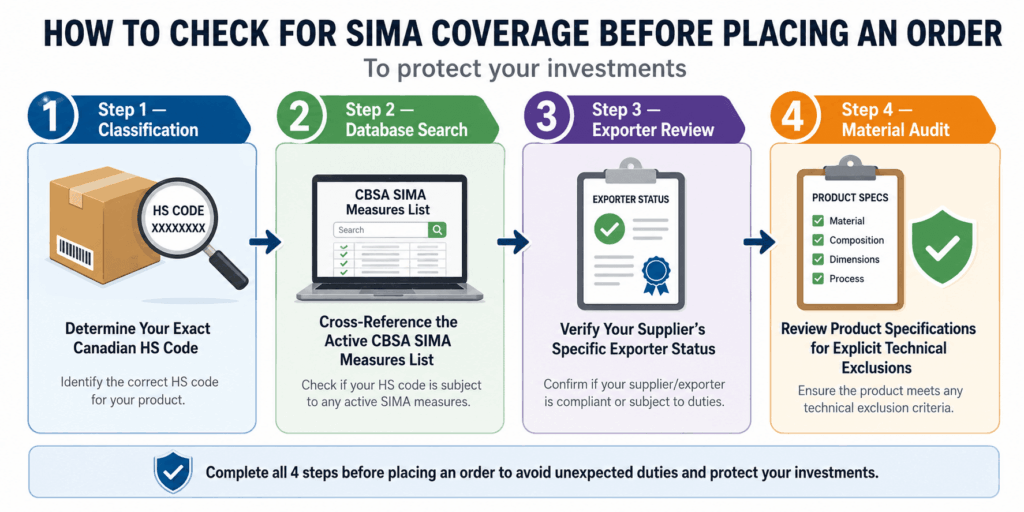
1.Determine Your Exact Canadian HS Code:
Step 1 — Classification
Work with an experienced customs professional to identify the precise 10-digit classification for your product under the Departmental Consolidation of the Customs Tariff. Never rely solely on an generic code provided by a factory.
2.Cross-Reference the Active CBSA SIMA Measures List:
Step 2 — Database Search
Visit the official Canada Border Services Agency SIMA portal. Search the “Measures in Force” directory using your primary tariff classification numbers to see if your product category matches any active investigations.
3.Verify Your Supplier’s Specific Exporter Status:
Step 3 — Exporter Review
If your product falls within a SIMA case, review the definitive list of participating companies. Check whether your specific manufacturer has an active, company-specific Normal Value allocation, or if they are subject to standard uncooperative rates.
4.Review Product Specifications for Explicit Technical Exclusions:
Step 4 — Material Audit
Examine the precise legal wording of the CITT injury finding. Some cases feature highly specific exclusions (such as specific dimensions, folding designs, or material types). Determine whether your item meets these narrow exemption criteria.
10. Mastering Canada Customs Clearance: Documentation and Best Practices
To ensure reliable, delay-free operations when importing from China to Canada, your primary shipping paperwork must be complete, accurate, and perfectly aligned.
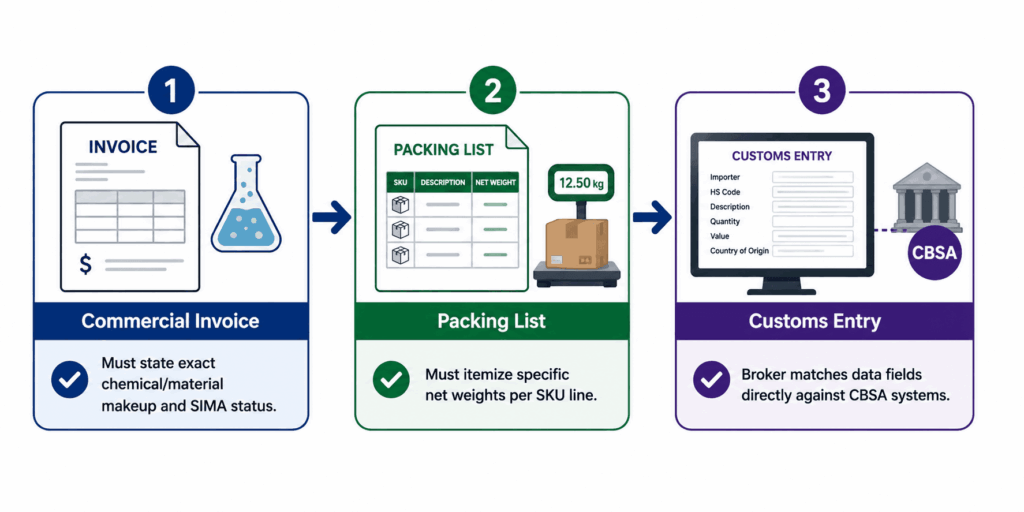
Your commercial invoice Canada must go beyond basic descriptions like “100 Chairs.” It needs to explicitly itemize the exact material composition, product dimensions, and target application. If your product line is technically exempt from an active SIMA case, ensure the invoice includes a clear, standard declaration statement (for example: “Not Subject to SIMA Measures UDS 2021 FX”).
Additionally, your team should maintain a centralized compliance archive. Keep copies of your primary test reports, material records, and certified customs entries for at least six years. Having this documentation organized and accessible allows you to respond quickly to post-clearance audits and protect your business from unexpected retroactive tax liabilities.
11. How Kisun Shipping Helps Importers Avoid SIMA Risks
At Kisun Shipping, we do more than arrange ocean freight from China.
We support importers with pre-shipment compliance screening, including:
- HS code verification before booking China to Canada shipping
- Supplier documentation review
- SIMA risk screening for high-risk categories
- Door-to-door DDP logistics planning (with compliance awareness)
With local teams in Shenzhen, Ningbo, Shanghai, and Yiwu, we help importers reduce customs surprises before cargo leaves China.
12. FAQ – Shipping from China to Canada & SIMA Risks
Is shipping from China to Canada always subject to SIMA?
No. Only specific HS codes and product categories are affected.
What is the average China to Canada freight rates in 2026?
It varies by season, but container rates fluctuate significantly and should always be calculated with landed cost risk included.
Can I avoid anti-dumping duties with DDP shipping?
No. CBSA still applies SIMA regardless of Incoterms.
Which products are most risky when importing from China to Canada?
Furniture, mattresses, steel products, and aluminum components.
Protect Your Canadian Supply Chain with Kisun Shipping
Succeeding in the transpacific trade lane requires more than simply tracking container freight rates. It demands a proactive approach to international trade compliance and risk management.
At Kisun Shipping, we look beyond basic transport management. We operate as an active compliance gatekeeper directly at the manufacturing source in China. With experienced local offices in major production hubs like Shenzhen, Ningbo, Shanghai, and Yiwu, we review your packaging marks, audit supplier export documentation, and verify tariff classifications before your cargo ever leaves the dock.
Whether you need to optimize your transit costs using reliable ocean lines to Vancouver, or require a dedicated customs broker to navigate complex SIMA frameworks for furniture and steel imports, we provide the infrastructure your business needs to grow safely.
Protect your profit margins from unexpected border delays. Contact the Kisun Shipping Team Today to schedule a comprehensive trade compliance review for your product catalog, secure your peak-season shipping space, and build a reliable, hold-free supply chain to Canada.

China Logistics Expert
About the Author
Katherine Kang is a China-based logistics consultant with over 11 years of experience in international trade and freight forwarding. Specializing in helping SMEs import from China to the USA, Canada, and Europe, she focuses on compliant, cost-effective solutions to avoid delays, tariffs, and hidden fees. From anti-dumping guidance to CNY planning, Katherine has managed hundreds of shipments, saving clients 15-30% on average.
Connect with Katherine on LinkedIn or contact Kisun Shipping for a free import consultation.