

DAP vs. DDP Shipping from China to the UK: What’s the Real Difference for UK Importers?
When shipping goods from China to the UK, DDP and DAP are two common options for arranging delivery to a UK destination.
At first glance, they may look very similar. In both cases, the seller or logistics provider can arrange transportation from China to the agreed destination.
The main difference is what happens when the goods reach the UK:
Under DAP, the buyer handles import clearance and pays applicable import duties and taxes. Under DDP, the seller is responsible for import clearance and the applicable duties and taxes under the agreed Incoterms® arrangement.
For UK importers, that difference can affect your customs process, tax handling and how much work you need to manage yourself.
DDP vs DAP: The Difference at a Glance
| DDP | DAP | |
|---|---|---|
| China pickup | Seller / logistics provider | Seller / logistics provider |
| Export procedures | Seller | Seller |
| International transportation | Seller | Seller |
| UK import clearance | Seller | Buyer |
| Import Duty & VAT | Seller handles under the agreed arrangement | Buyer |
| Final delivery | Included to named destination | Included to named destination |
| Customer involvement | Lower | Higher |
Note: The exact scope should always be confirmed in the quotation and shipping agreement.
What Is DDP Shipping from China to the UK?
DDP means Delivered Duty Paid.
Under Incoterms® 2020, the seller delivers the goods to the named destination cleared for import and with applicable import duty and taxes paid. It carries the seller’s highest level of responsibility among the Incoterms® rules.
A typical China-to-UK DDP shipment may look like:
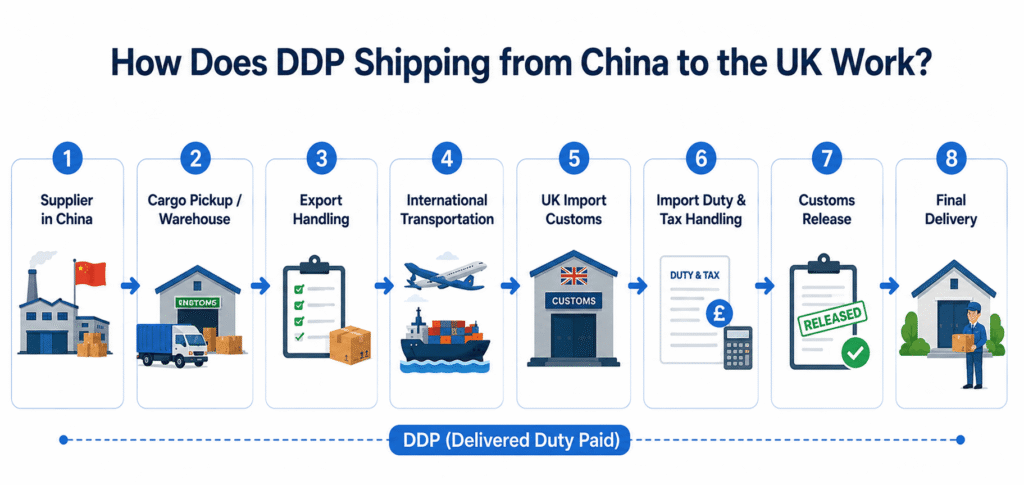
For businesses that prefer a simpler logistics process, DDP can reduce the amount of destination-side work they need to arrange.
Kisun DDP to the UK
Under Kisun’s DDP arrangement, the customer does not need to provide their own EORI/VAT details to us. Our service can include China pickup, warehouse handling, export operations, UK import clearance, agreed duty/VAT handling and final delivery.
The exact scope should be confirmed before shipment.
What Is DAP Shipping from China to the UK?
DAP means Delivered at Place.
Under DAP, the seller is responsible for transporting the goods to the named destination, but the buyer handles import clearance and applicable import duties and taxes.
A typical shipment looks like:
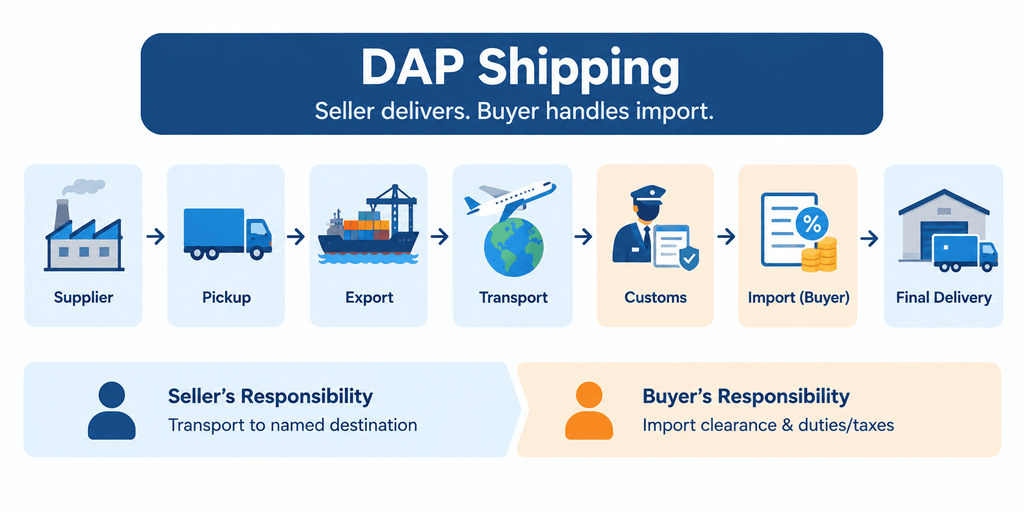
For UK imports, businesses importing commercial goods into Great Britain generally need a GB EORI number, and customs declarations can be handled directly or through a customs agent. Northern Ireland has different EORI considerations.
If your company already has its own UK customs setup, DAP can give you more control over the import process.
DDP or DAP: Which One Fits Your Business?
There is no single option that works for every importer.
DDP may suit you when:
You want a more integrated shipping service from China to your UK delivery address.
You do not want to arrange UK import clearance yourself.
You prefer the logistics provider to handle the agreed import duty and VAT process.
DAP may suit you when:
You already have a UK EORI and customs broker.
You want to manage your own import declaration.
You prefer to handle import VAT and Customs Duty through your existing UK accounting and customs process.
For example, a VAT-registered UK business may use Postponed VAT Accounting (PVA) to account for import VAT on its VAT Return, subject to the relevant conditions.
What About EORI, Customs Duty and Import VAT?
This is where many shipping quotes become confusing.
A UK business importing goods into Great Britain generally needs a GB EORI for customs activities. The commodity code and customs value are also important because they help determine the applicable duty and VAT treatment.
The key difference is who is responsible for the import process.
With DAP, the buyer normally manages the UK import side.
With DDP, the seller is responsible for import clearance and applicable duty and taxes under the agreed DDP structure. However, a DDP quote should not be judged simply by whether it says “duty paid.” The actual customs representation and import arrangement need to be workable for the shipment.
This is particularly important for UK imports because customs and VAT obligations depend on the actual import structure, not just the wording on a freight quotation.
DDP vs DAP: Don’t Compare Only the Freight Rate
When comparing quotations from different freight forwarders, do not look only at the transportation price.
Check whether the quotation includes:
China pickup
Warehouse / consolidation
Export handling
International freight
UK customs clearance
Customs Duty
Import VAT
Final delivery
Two quotations with the same “door-to-door” description may still have very different cost structures.
A lower freight rate does not necessarily mean a lower total landed cost.
Do You Always Need DDP?
No.
Some UK importers have their own:
- EORI
- Customs broker
- VAT process
- UK trucking or warehouse arrangements
In that case, a buyer-managed import structure may make sense.
For example, a customer may only need:
China supplier pickup → China warehouse consolidation → Export → Ocean Freight → UK Port
and handle UK customs and inland transportation through their existing partners.
This is particularly relevant for importers buying from multiple suppliers in China.
Learn more about FCL vs LCL Shipping from China to the UK.
DDP vs DAP: 4 Questions to Ask Before Booking
Before accepting a quotation, ask:
1. Who will make the UK import declaration?
2. Who is responsible for Customs Duty and import VAT?
3. Does the quoted price include customs clearance and final delivery?
4. What information or EORI/VAT details must I provide?
These four questions can often reveal the difference between two apparently similar shipping offers.
FAQ
Is DDP more expensive than DAP?
Not necessarily when comparing the total landed cost. DDP includes additional destination-side responsibilities and taxes, while DAP leaves import-related costs and processes with the buyer.
Can DAP shipping deliver to my UK warehouse?
Yes. DAP can be arranged to a named destination. However, import clearance and applicable import duties and taxes remain the buyer’s responsibility.
Do I need a UK EORI for DAP?
For commercial imports into Great Britain, businesses generally need a GB EORI.
Is DDP available for sea, rail, truck and air freight?
Yes. DDP can be used with any mode of transport under Incoterms® 2020.
Need Help Choosing DDP or DAP?
The right shipping structure depends on your cargo, destination, import setup and the level of responsibility you want to manage yourself.
Send Kisun Shipping these six details:
Origin + Destination + Commodity + CBM/Weight + Incoterm + Cargo Ready Date
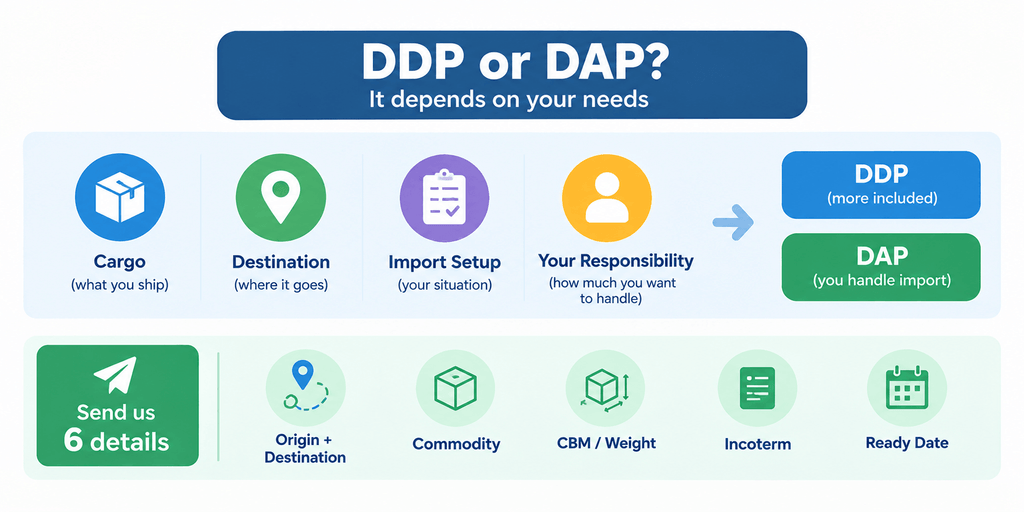
We can review the shipment requirements and provide a clear quotation based on the actual scope of service.

China Logistics Expert
About the Author
Katherine Kang is a China-based logistics consultant with over 11 years of experience in international trade and freight forwarding. Specializing in helping SMEs import from China she focuses on compliant, cost-effective solutions to avoid delays, tariffs, and hidden fees. Katherine has managed hundreds of shipments, saving clients 15-30% on average.
Connect with Katherine on LinkedIn or contact Kisun Shipping for a free import consultation.